
This post contains affiliate links. As an Amazon Associate I earn from qualifying purchases.
What exactly is Grill and Drill?
Grill and Drill is a term that is used when students are asked to do the same task over and over again. It is persistent and repetitive exercise with the goal of learning something. Grill and drill to teach basic math operations like addition, subtraction, multiplication, and division means practicing many times throughout different grade levels and throughout the entire school year. In this way, students will gain confidence and proficiency.
There are many reasons why I support using Grill and Drill to teach basic math operations. As a middle school math teacher, I often saw students who struggled with math. As I spent more time with them, I realized that they weren’t struggling with the concepts, they were struggling with basic math operations. Addition and subtraction were a challenge but they really struggled with multiplication and division.
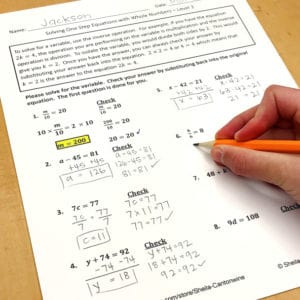
Take variables for example. Most students understood the meaning of a variable and could see how you would solve for variables. It’s the basic operations that always hung them up.
Let’s say you had an equation, 8x = 56. They understood that to solve for the variable they had to divide both sides of the equation by 8. What they didn’t know was that 56 divided by 8 was 7! I would give them a similar problem, 2x = 4 and right away they knew the answer was 2. But they struggled with the bigger numbers. And they were in middle school!
The same thing would happen with integers. Students were able to understand the concept of negative numbers but they really struggled when they had to do the actual math. If they had a problem like +19 + – 25 they knew that the answer was negative but they would struggle with the actual subtraction.
Why do students struggle with the basic operations?
I think it has to do with the way that math is taught in the lower grades. Not enough practice is given with basic operations so when they progress into more difficult math in the upper grades, they struggle.
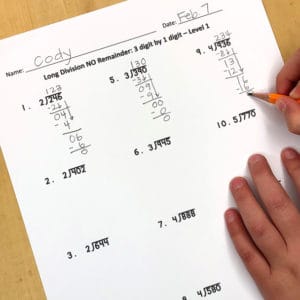
When I was growing up, my teachers always used grill and drill exercises. I remember doing endless worksheets on addition, subtraction, multiplication, and division when I was in elementary school. While they weren’t the most fun, they helped me learn my basic math operations. When I got into algebra and higher level math, I knew my basic operations very well and hardly ever struggled.
I know there are new ways to teach basic operations with conceptual learning and understanding and I’m all for that. Teach these concepts the best way that you know how and the best way that students learn. But once they understand the concepts, that’s where grill and drill comes in. Practice, practice, and more practice until they know addition, subtraction, multiplication, and division like the back of their hand. They shouldn’t have to think about what 81 ÷ 9 is, they should just know it.
Practice Makes Perfect
Think about athletes and how they perform. They spend years learning the basics like how to dribble for basketball, how to skate for hockey, how to perfect their swing in golf or how to kick a hard shot on goal for soccer. Then they practice over and over again until it is second nature. They don’t have to think about it. After all the hours of practice, their body just knows what to do.

Think about elite musicians. They aren’t great musicians because they practiced a song once. They’re great because they practice over and over again. They spend countless hours with their instruments before they are able to perform effortlessly.
So why are we not doing this when we teach kid basic math operations? How can we expect them to feel confident with math when doing the simple operations are such a struggle for them? What are some ideas for making “grill and drill” easier for students and teachers.
Spiraling Helps with Grill and Drill to Teach Basic Math Operations
One thing that might help is spiraling topics throughout the school year. For example, with multiplication, you could use different resources throughout the school year so students don’t feel like it is tedious work. Worksheets, task cards, games, math centers, holiday resources, and digital task cards are all great ways to practice the same skill but with a different delivery.
Timed Tests
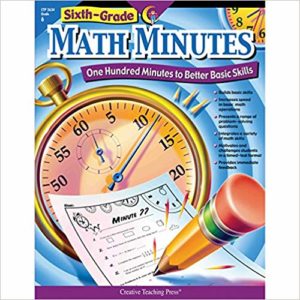
I also love the idea of doing timed tests. When students are in lower grades, it’s a great way for them to become comfortable with the basic operations. Even in middle school you could do something like math minutes (affiliate link). I used to have math minutes once per week with my students. They had 10 math questions to complete in 1 minute. Just for fun, I’d do it with them and they were always shocked at how quickly I could complete the questions. I’d keep track of what their scores were then give prizes at the end of each quarter. It made math fun and it motivated them to get stronger in their basic operations.
Differentiated Resources Help with Grill and Drill to Teach Basic Math Operations
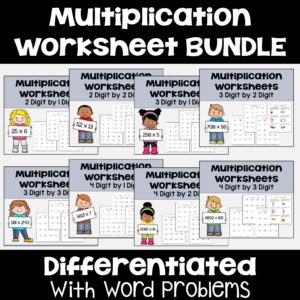
I am a huge proponent of differentiated resources and most of my math resources have 3 different levels. Students can start at the lowest level and gain confidence as they move through more challenging levels. It’s a great way for students to get lots of practice without getting overwhelmed.
You could also use differentiated resources by student. If you have a student who is BELOW grade level then you could start them at level 1. Students who are AT grade level could work on level 2. Students who are ABOVE grade level could complete level 3. That way, all students could work at the level that they are most comfortable with.
What’s the bottom line?
Students need to practice the basic operations more regularly when they are in the upper elementary grades. I have found that if they’re not able to do that they will struggle with the more complicated math concepts like fractions, decimals, integers, and equations.