• Skip to primary navigation
  • Skip to main content
  • Skip to primary sidebar
  • Skip to footer

Sheila Cantonwine

  • Home
  • About Me
  • Blog
    • 4th Grade Math
    • 5th Grade Math
    • 6th Grade Math
    • Back to School
    • Boom Cards
    • Classroom Organization
    • Digital Resources
    • Holidays
    • Math Test Prep & Review
    • Summer Math
    • Teacher Self Care
  • Shop
    • Teachers Pay Teachers
    • Amazon
    • Boom Learning
  • Affiliates
  • Contact
  • Navigation Menu: Social Icons

    • Email
    • Facebook
    • Instagram
    • Pinterest

6th Grade Math

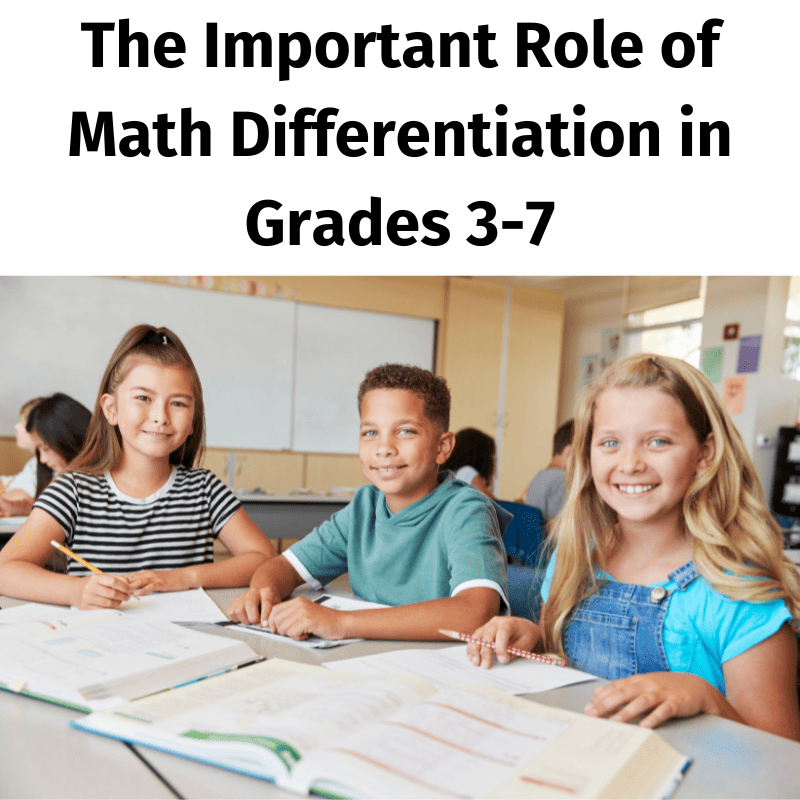
The Important Role of Math Differentiation in Grades 3-7

February 14, 2024 by Sheila Cantonwine

Hey, math teachers! We know our classrooms are full of different learners, and it’s crucial to adapt our teaching to each student. Let’s dive into why making math lessons unique for grades 3 to 7 is so important. In this blog post, I’ll explore five key reasons that explain the important role of math differentiation in Grades 3-7.

1. Everyone’s Unique

Students have different learning styles. Some love visuals, some need hands-on activities, and others prefer talking it out. Tailoring our teaching methods to these styles helps every student shine.

2. Ready, Set, Go

Students start each grade with different math skills. Some ace the basics, while others need a little extra help. Customizing our teaching lets us give support where it’s needed and add challenges for those ready to tackle more.

3. Go at Your Own Pace

Math isn’t a one-size-fits-all deal. Everyone learns at their own speed. Adapting our teaching speed to match each student’s needs keeps them engaged and excited about learning.

4. Fill in the Gaps

Moving up in grades sometimes means finding gaps in what students know. Customizing lessons helps us spot these gaps early and fill them, making sure every student is ready for the next big math challenge.

5. Promoting Critical Thinking

Math isn’t just about memorizing facts. It’s about thinking things through. By changing our teaching to fit each student’s level, we can add problem-solving tasks that boost their understanding and love for math.

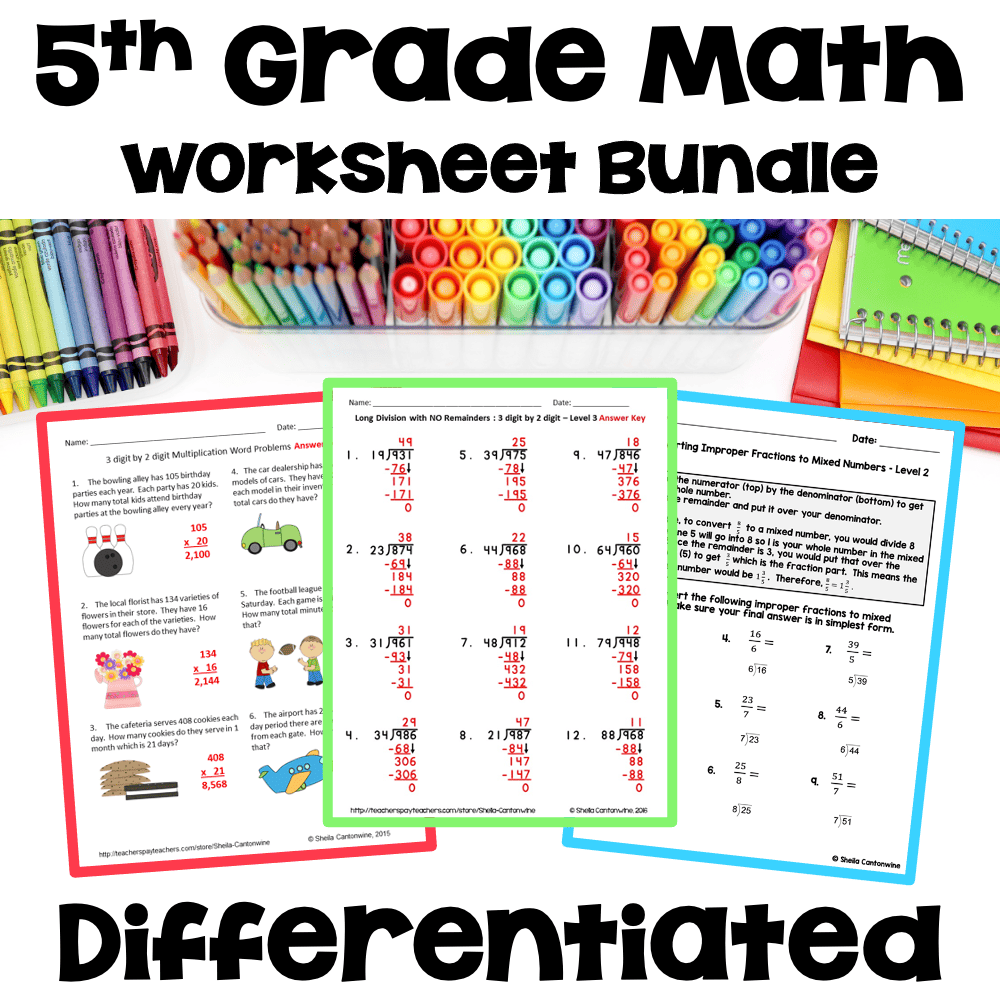
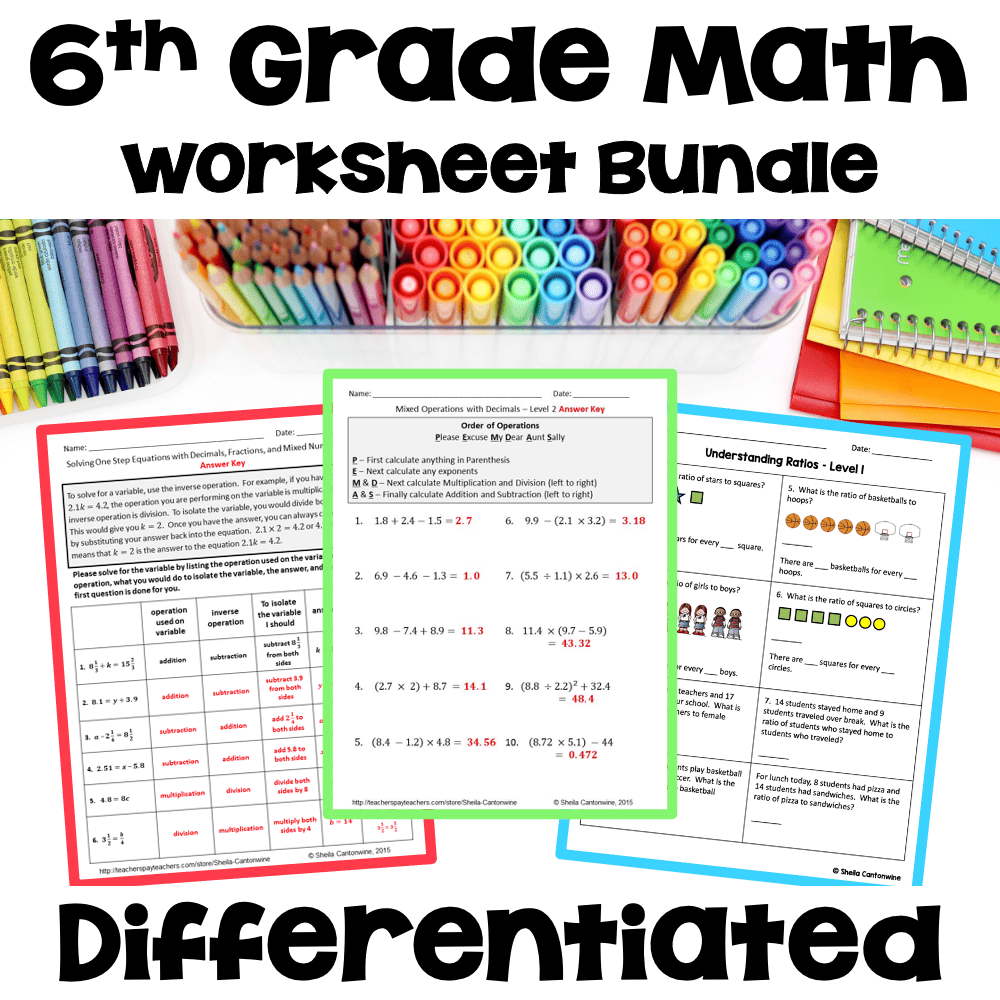
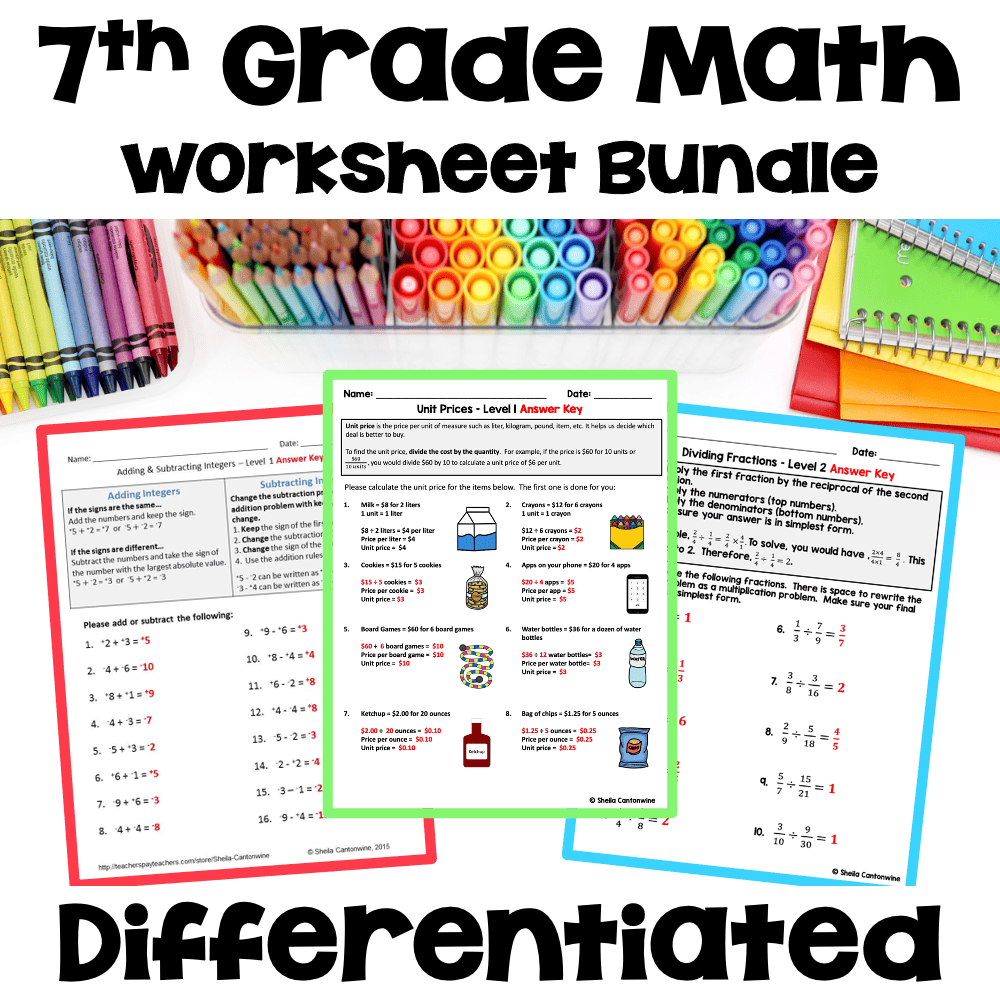
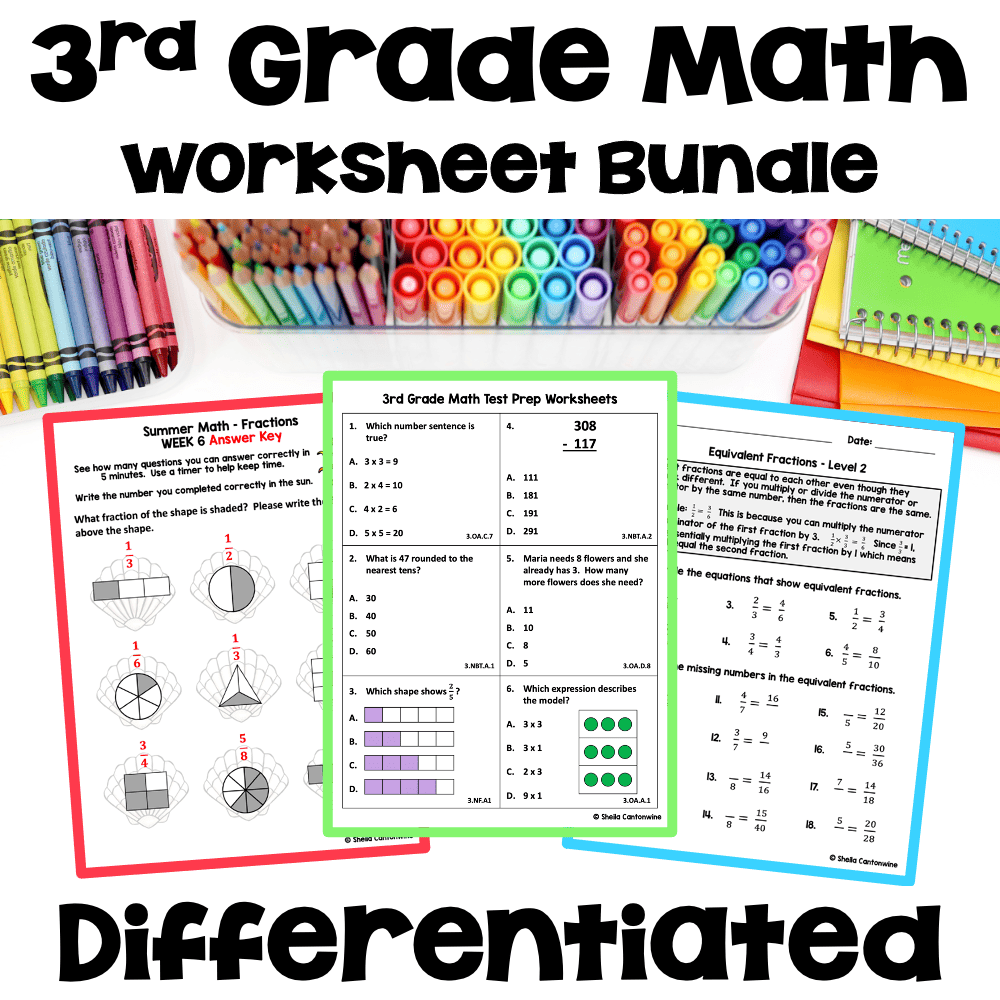
Want to learn more about The Important Role of Math Differentiation in Grades 3-7? Check out these differentiated math bundles for 3rd, 4th, 5th, 6th, and 7th grade math.
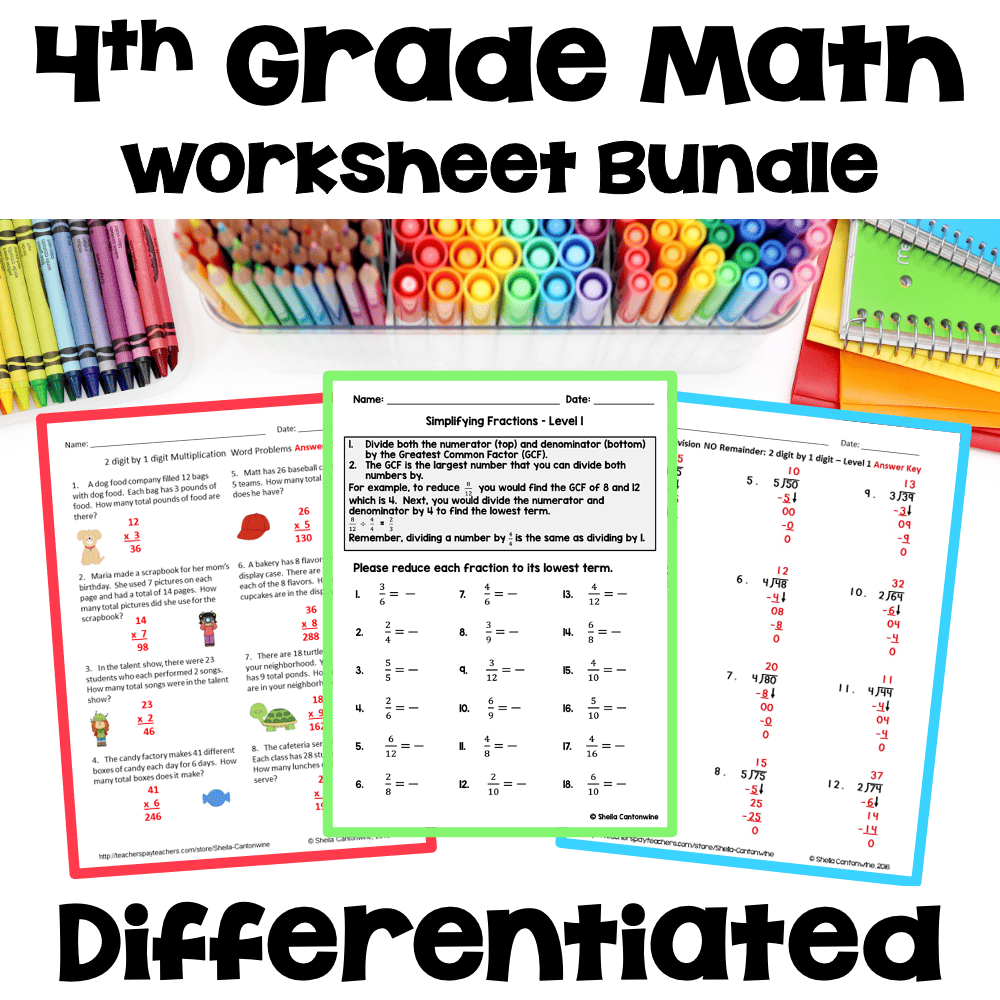
Differentiating our teaching in grades 3 to 7 is a game-changer. Embracing each student’s uniqueness creates a space where everyone can grow, love math, and rock their academic journey. Let’s keep making math awesome for every student!

You might also be interested in 3 Easy Ways to Differentiate Math Instruction for 4th Graders.
Filed Under: 4th Grade Math, 5th Grade Math, 6th Grade Math, 7th Grade Math Tagged With: 3rd Grade Math, 5th Grade Math, differentiated math, Differentiation

How to Teach Understanding Ratios with Differentiated Worksheets

June 2, 2023 by Sheila Cantonwine Leave a Comment

Understanding Ratios Differentiated Worksheets

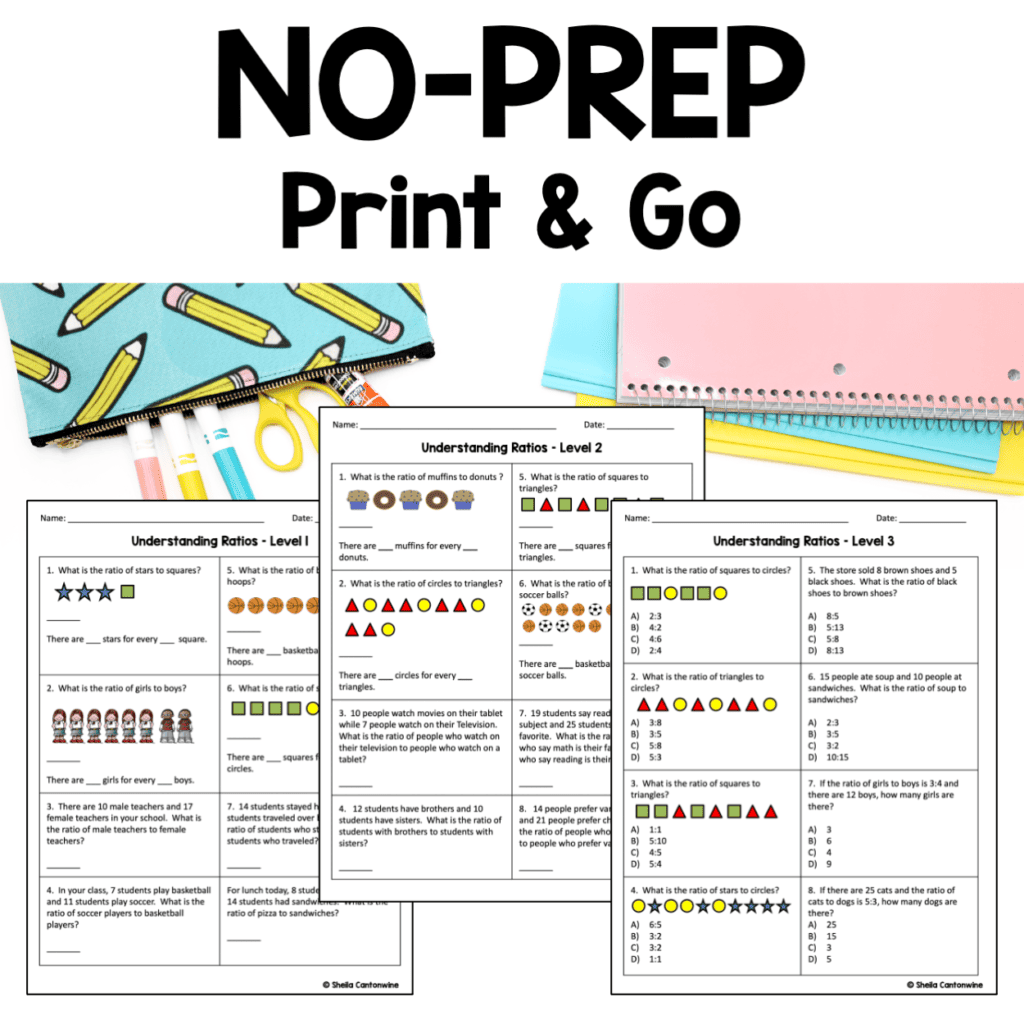
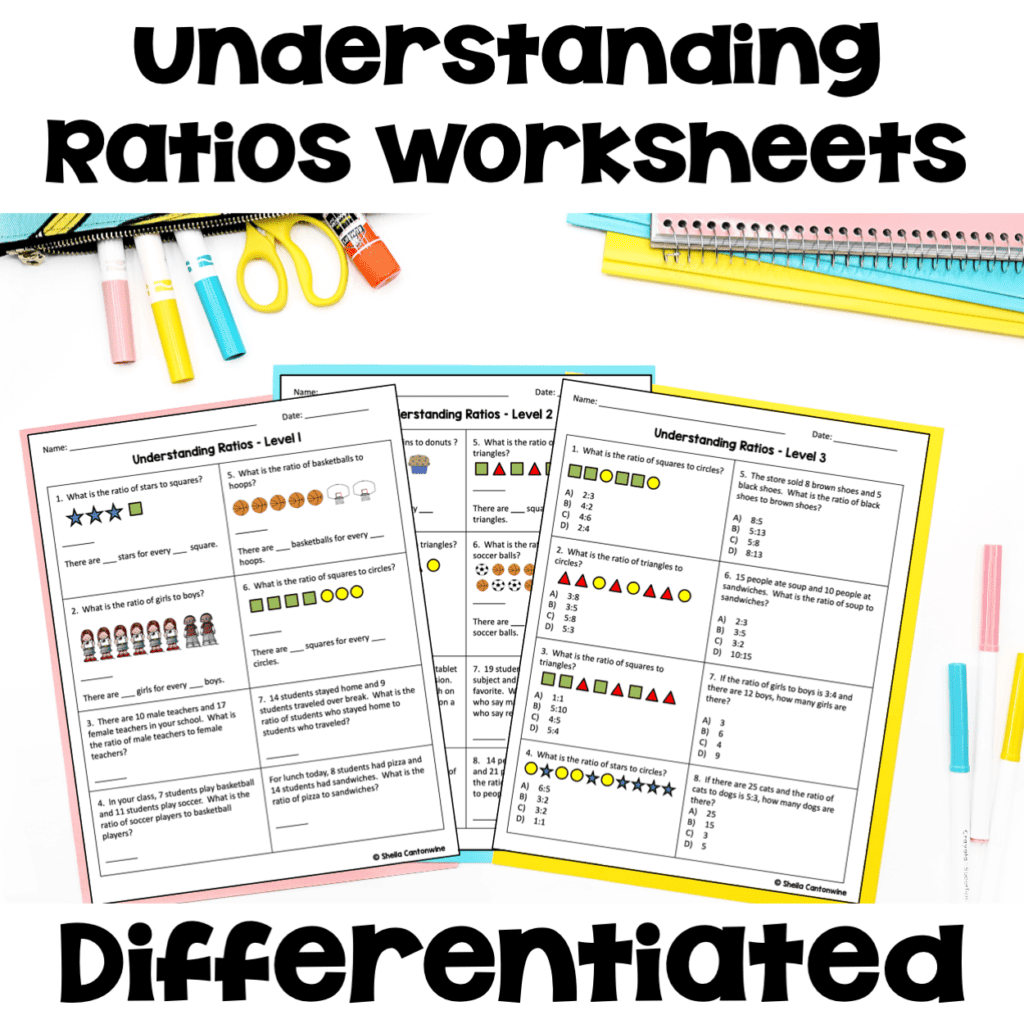
Learning how to teach understanding ratios with differentiated worksheets can sometimes be a challenge, especially when you’re trying to meet the needs of all your students. Plus, you’ll want resources that lighten your load, meaning they’re no-prep, easy-to-use, and self-checking with detailed answer keys. I find these worksheets to be super helpful in teaching this concept to both 6th and 7th-grade students. Students will have lots of great practice because this resource consists of three differentiated worksheets, each offering unique learning opportunities.

What is included in the resource?

The first two worksheets encourage students to actively participate by writing ratios based on visual representations and word problems. To support test preparation, the third worksheet features multiple-choice questions.

These Ratio Worksheets offer versatility, as they are available in both digital and printable formats. We’ve got you covered whether you prefer a technology-driven classroom or prefer traditional pen-and-paper exercises, we’ve got you covered.

How does the differentiation work?

Understanding Ratios Differentiated Worksheets

You’ll have lots of practice for your students with three differentiated and easy-to-use worksheets. With three levels of difficulty, students start with easier questions and then move to more challenging ones as they gain confidence with ratios.

Differentiated math worksheets are great because you can have students start with level 1 and then move to levels 2 and 3 as they gain more confidence. You could also, for example, use level 1 for classwork, level 2 for homework, then level 3 for review.

What else is included other than the three worksheets?

Teacher Notes for Understanding Ratios Differentiated Worksheets

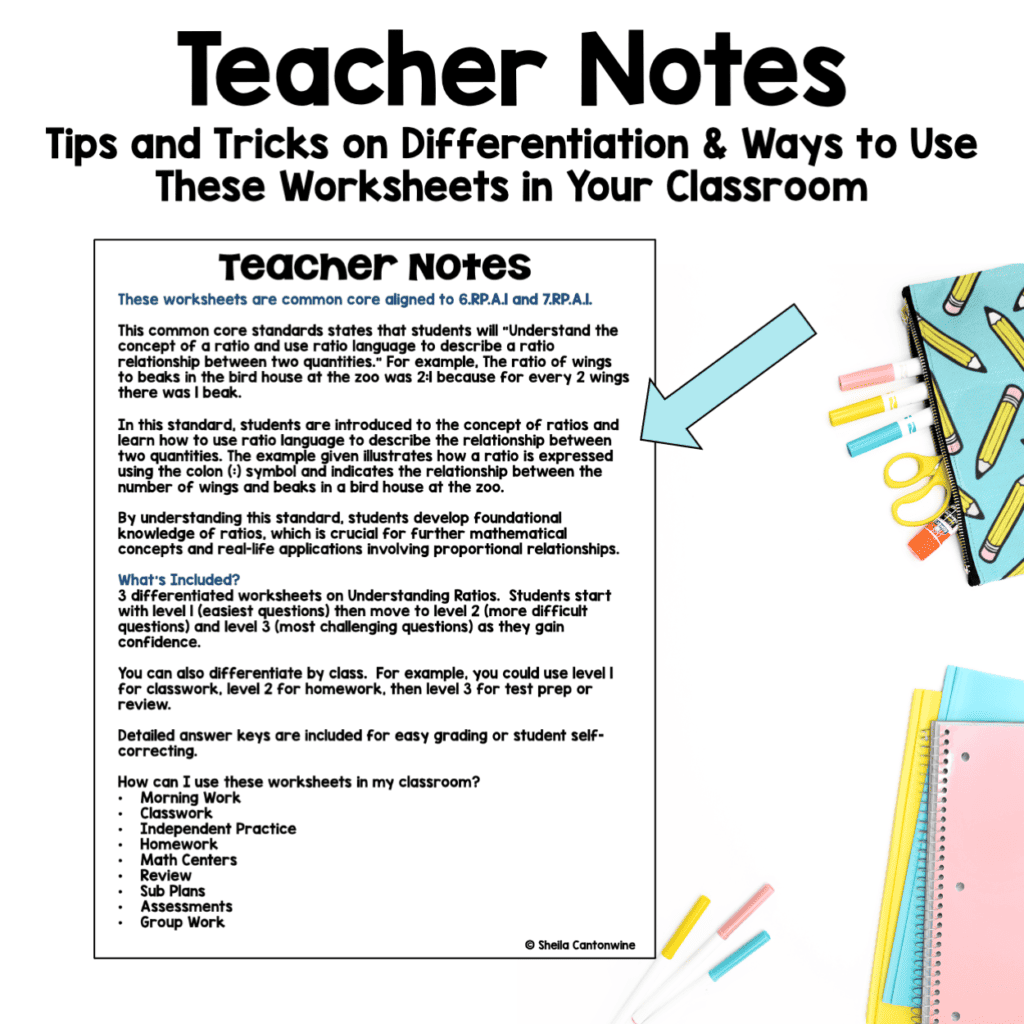
There are Teacher Notes with tips and tricks on how to use these worksheets in your classroom. The teacher notes also cover the common core alignment and what it’s important for students to learn this concept. The teacher notes also explain different ways to use the worksheets in your classroom, such as Observations – (administrators love differentiated resources), Small Group Instruction, Math Centers, Homework, Classwork, Test Prep, Review, Remediation, Morning Work, Early Finishers, Bell Ringer Questions, and Sub Plans.

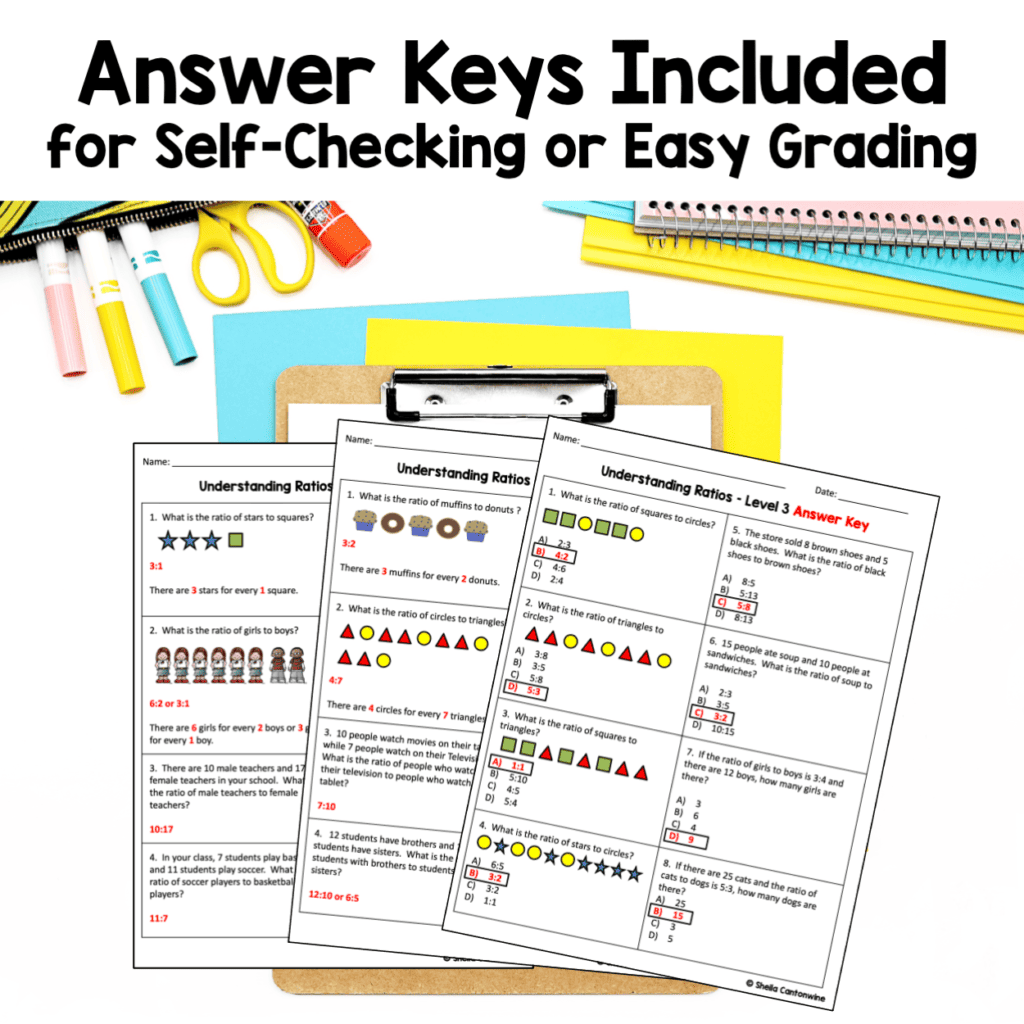
Answer Keys for Understanding Ratios Worksheets

Are answer keys included?

Yes! Answer keys are provided for easy grading. Having answer keys is also great for students to self-check their work. Students often learn more when they correct their own work.

Where can I find these worksheets?

They’re available in my Teachers Pay Teachers store. You can also click on any of the images above to direct you to this resource. I hope this article on How to Teach Understanding Ratios with Differentiated Worksheets was helpful.

You might also be interested in other 6th grade math topics in my blog.

Filed Under: 6th Grade Math Tagged With: 6th grade math worksheets, ratios, understanding ratios

First Week of School Activities for 6th Grade Math

June 13, 2022 by Sheila Cantonwine

First Week of School Activities for 6th Grade Math

The first days and weeks back to school are very busy and exciting for students. It’s even more challenging when 6th grade is the beginning of middle school in your district and students might be in a new school. Students need to learn new routines and get to know you as their teacher while making new friends. It’s an exciting but distracting time. Plus, getting students engaged is often challenging after having the summer off. During this time, I recommend using transition resources to help students learn the new routines of your classroom while reviewing 5th-grade math topics. Using any of these First-week of school Activities for 6th Grade Math will help your students review the topics from 5th-grade math without being too overwhelmed.

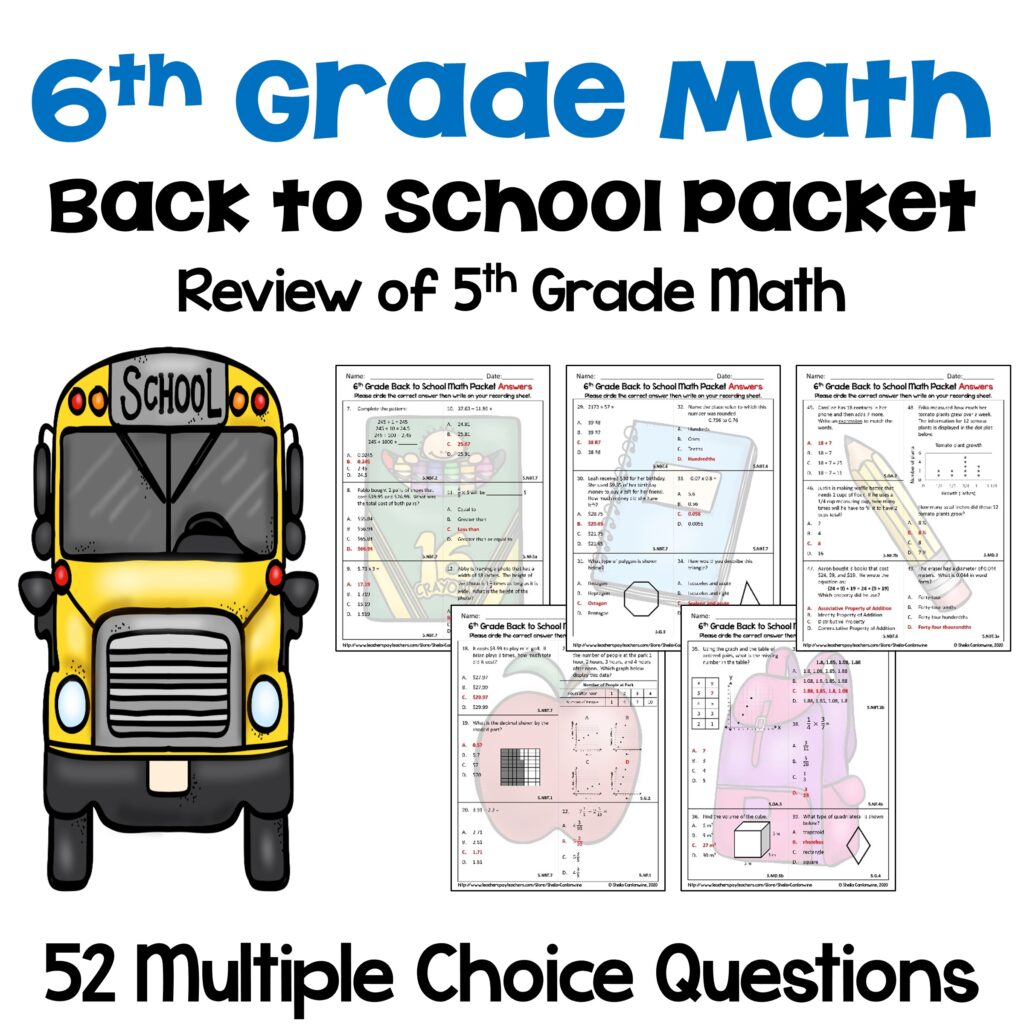
1. Back to School Math Worksheets for 6th Grade Math

First Week of School Activities for 6th Grade Math

These back-to-school math worksheets are perfect for reviewing all the topics of 5th-grade math at the beginning of the year. All of the questions are multiple-choice. This makes it easier for students to complete without being too intimidating. Each question also has a common core alignment. This makes it easy to see which 5th-grade topics to review before you start teaching 6th-grade math. Best of all, it’s no prep! Just print, and you’re ready to go. Plus, they include both digital and printable versions for more flexibility.

Here’s what one teacher had to say about this resource: “This was AMAZING to help my 6th grade Math students at the beginning of the year to review their 5th grade Math skills and concepts. THANK YOU for a TERRIFIC resource I’ll use year after year!”

Teacher Feedback from product listing on Teachers Pay Teachers

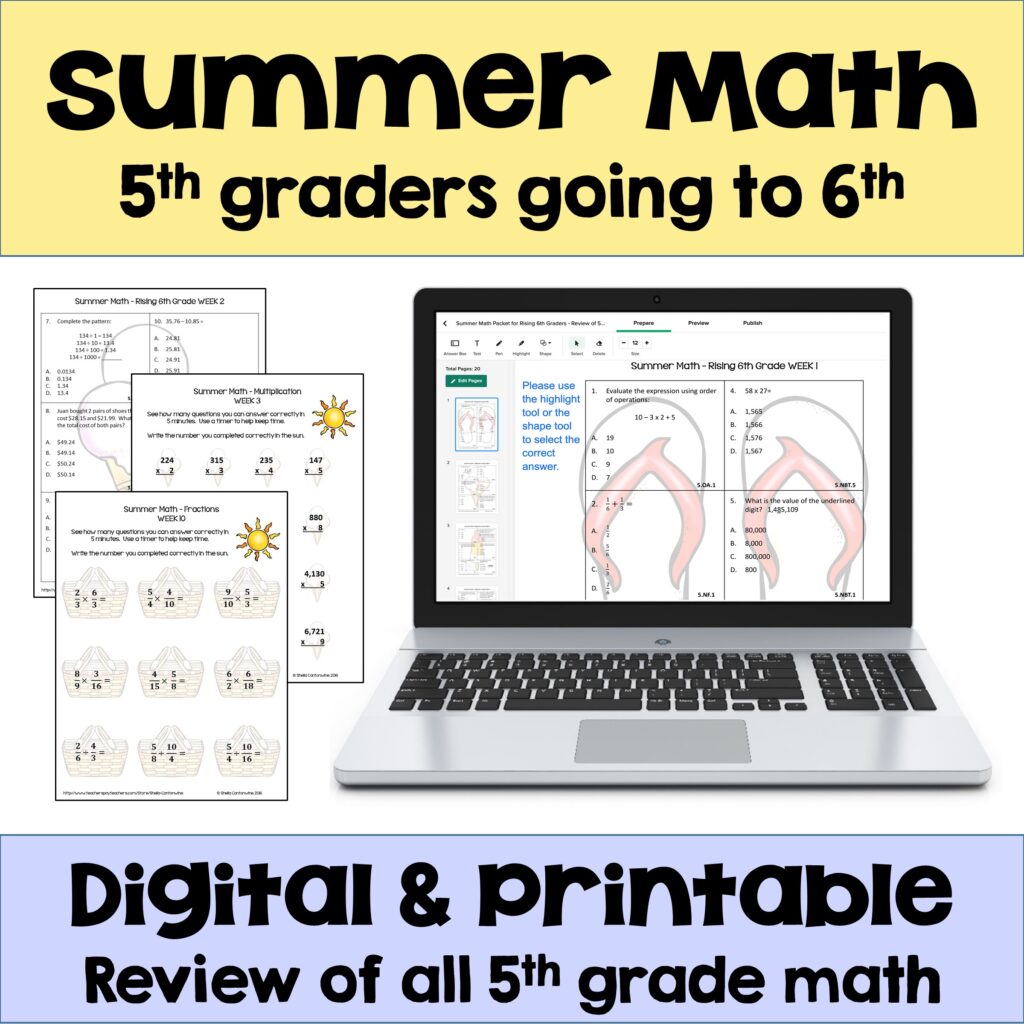
2. Summer Math for Rising 6th Graders

Summer Math for 5th Graders Going to 6th Grade

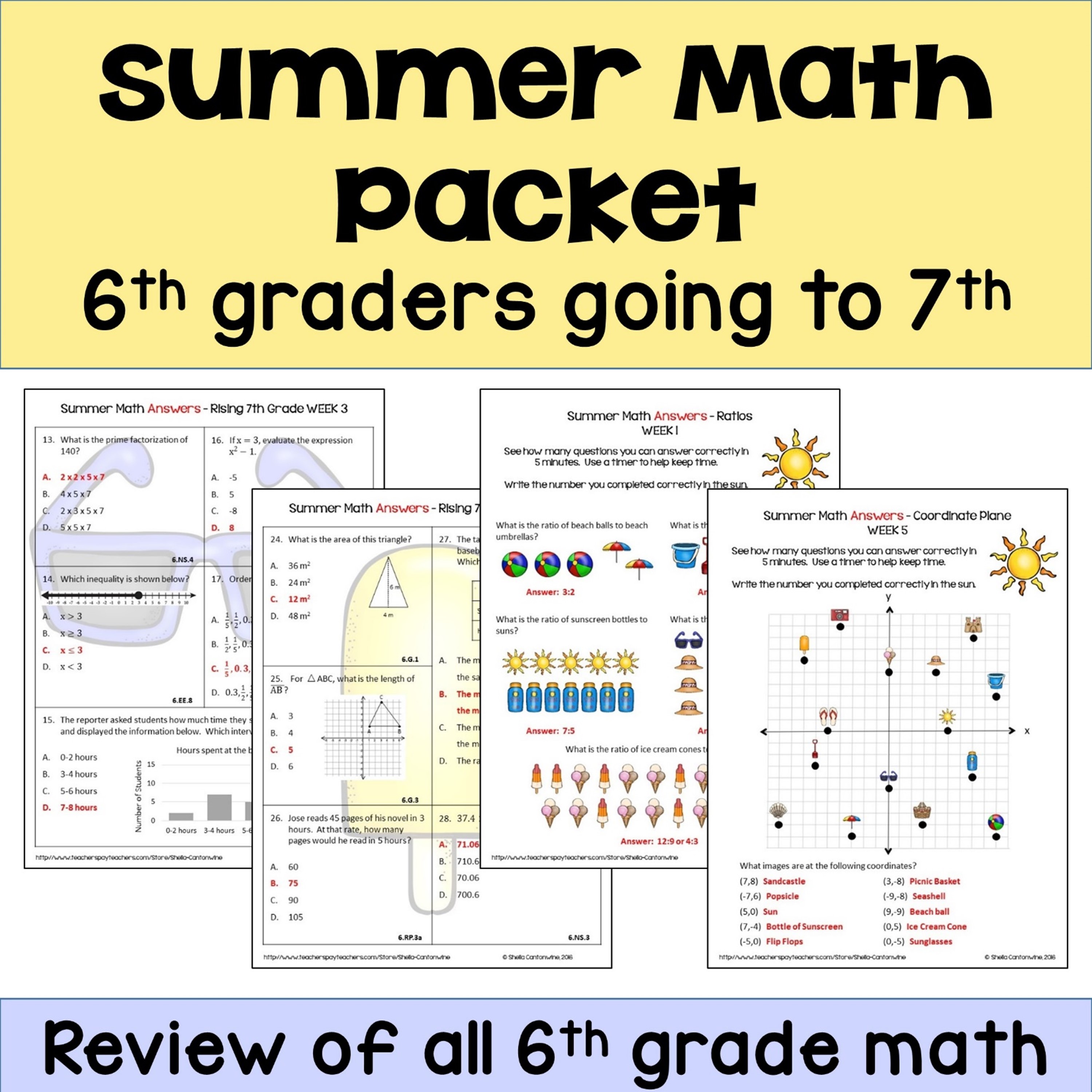
Here’s another favorite for the First Week of School Activities for 6th Grade Math. This summer math packet is a great activity when the weather is still warm, and students are still in the summer mood. There are multiple-choice questions similar to the back-to-school math worksheets, but there are also additional 5th-grade math skills pages for your students to work on.

These worksheets would be great for homework assignments on the first days of school. You could also use these for classwork or math centers. There are many ways to use these summer math packets with your 6th graders.
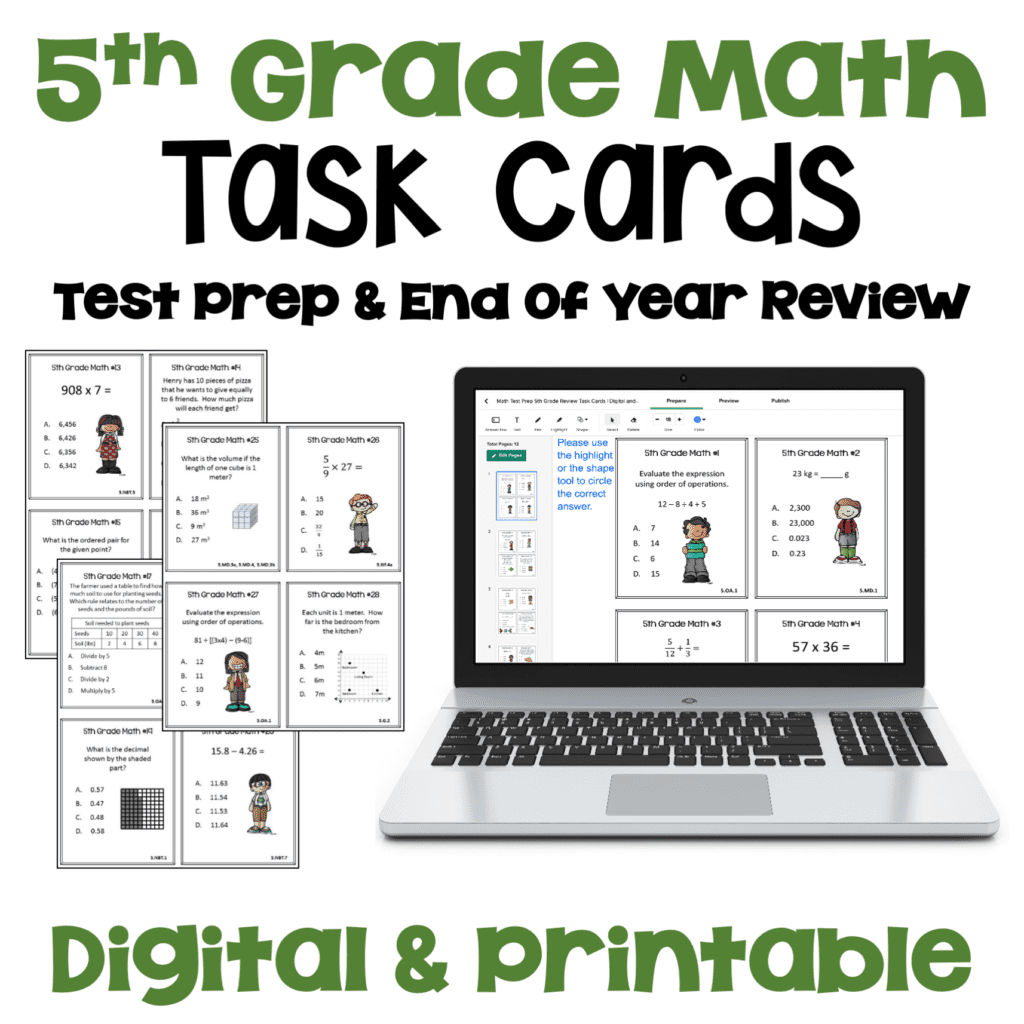
3. 5th Grade Math Review Task Cards

First Week of School Activities for 6th Grade Math

When you think your students need extra review with the 5th-grade math topics, check out these 5th-grade math task cards. They’re digital and printable, giving you lots of options in assigning them to students. They feature 48 different task cards that review ALL the 5th-grade math topics. They even have the common core alignment on each task card, so you can easily see which topics students struggle with.

Task cards are great because they can be used throughout the school year. They’re also a great way to have your students get up and move when you use them for Math Centers, Scoot, Around the Room, or a Scavenger Hunt.

When your students are comfortable with all the 5th-grade math topics, you can have them practice 6th-grade math topics using these task cards.

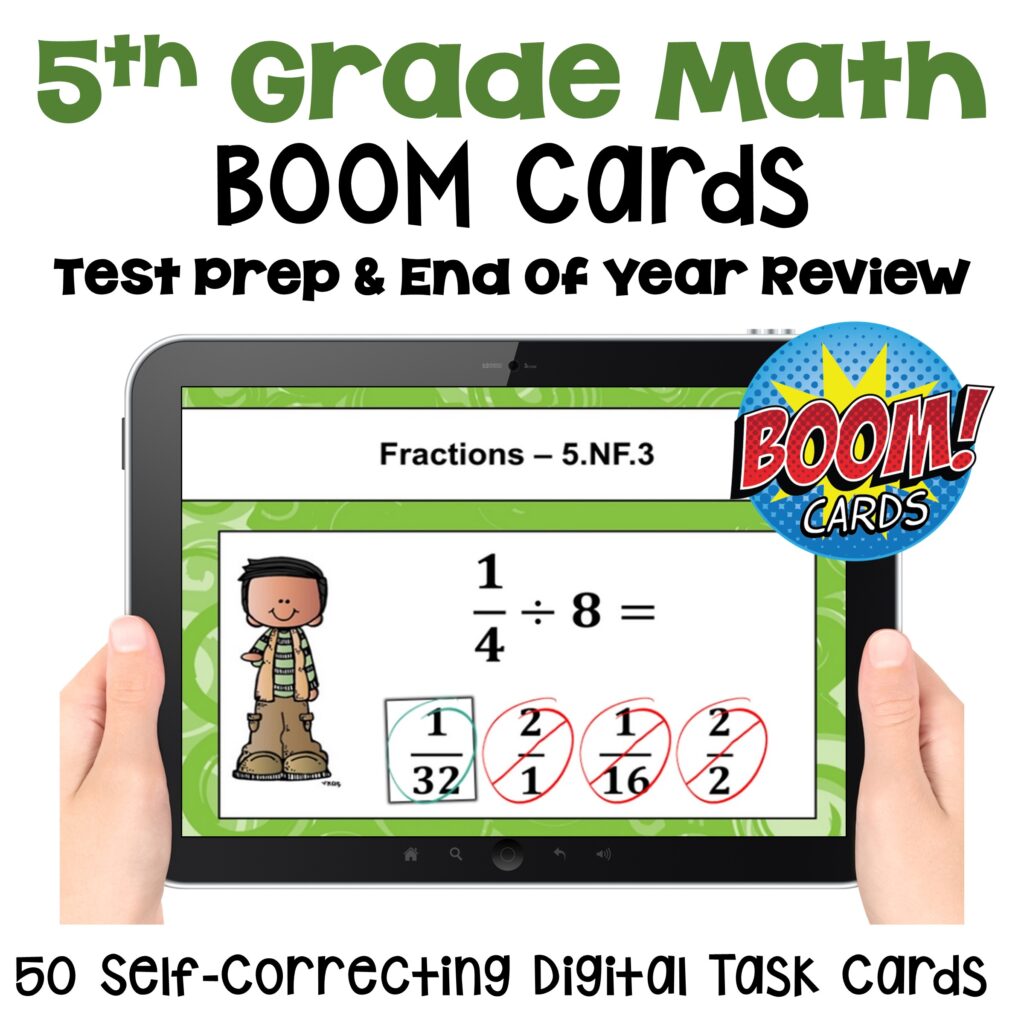
4. 5th Grade Math Review Boom Cards

5th Grade Math Review with Boom Cards

You can also use these 5th-grade math self-correcting boom cards to review and assess your students at the beginning of the school year. If you’re new to Boom Cards, check out 6 Reasons to Use Boom Cards in Your Classroom.

These are super helpful because they track student data. Each of the Boom cards has the common core alignment for 5th-grade math, so you can easily see which topics you need to review in the first weeks of school.

If your students love Boom cards and you want to lighten your load with grading, check out the 6th Grade Math Boom Card Bundle.

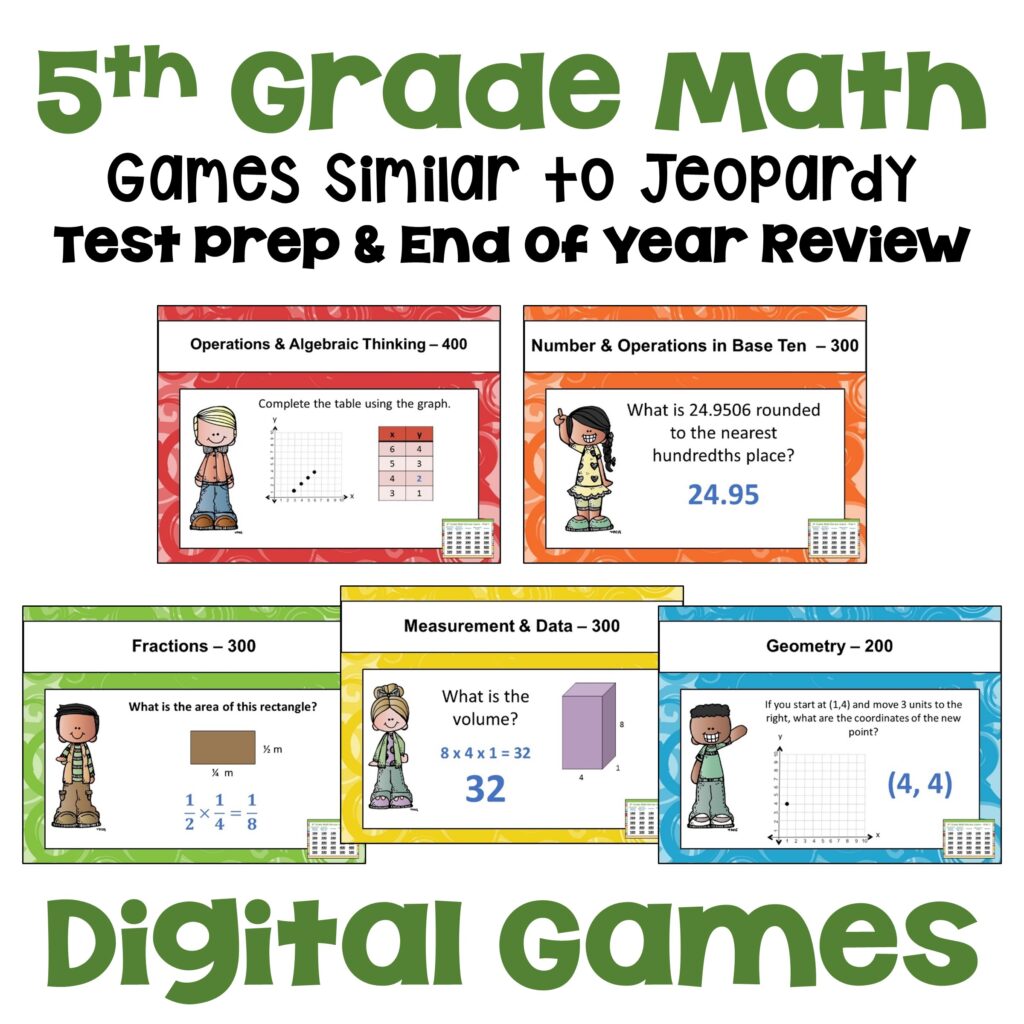
4. 5th Grade Math Review Games

5th Grade Math Review Games

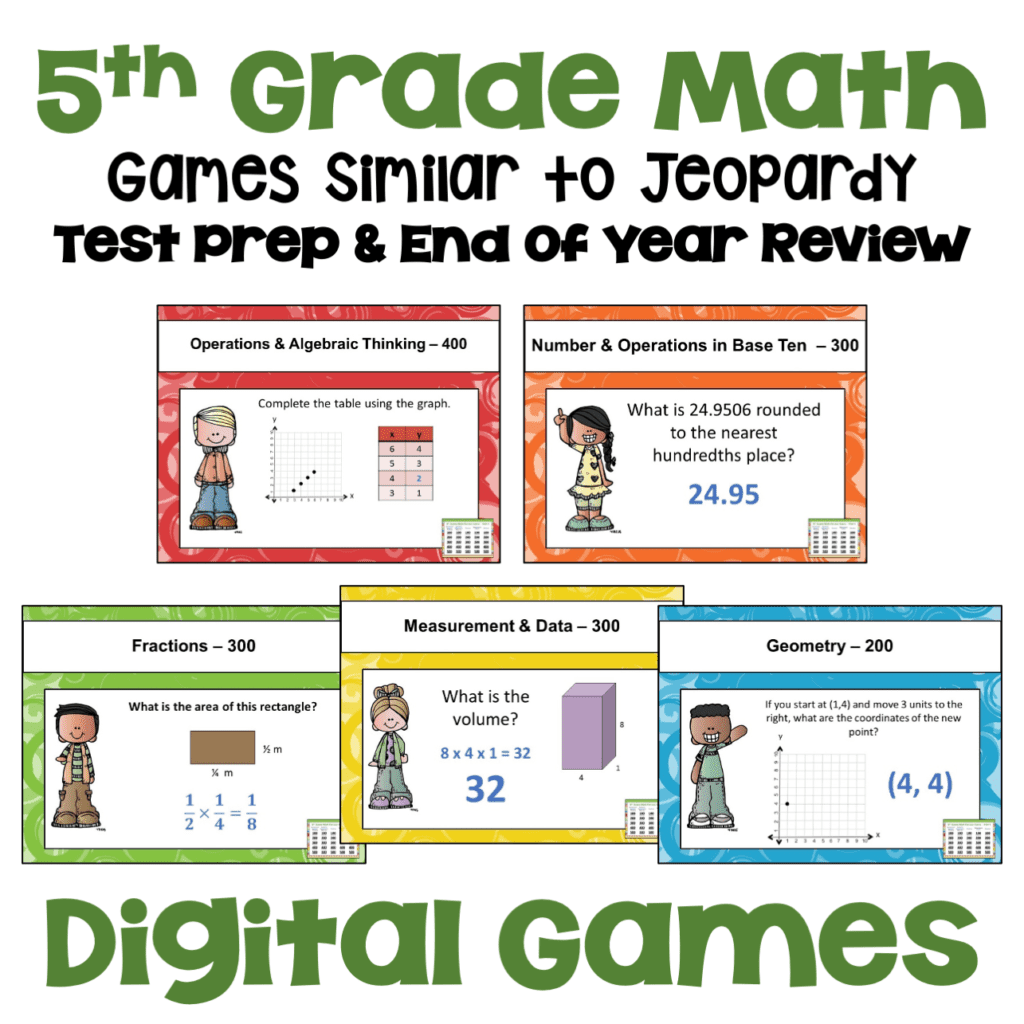
If you and your students enjoy playing games similar to Jeopardy, check out these 5th-grade math review games. There are two different games with editable questions. This makes it easy to customize the questions for your class or you can use the questions as they are written. They’re a fun way to review all the topics and teach your students how to work with others.

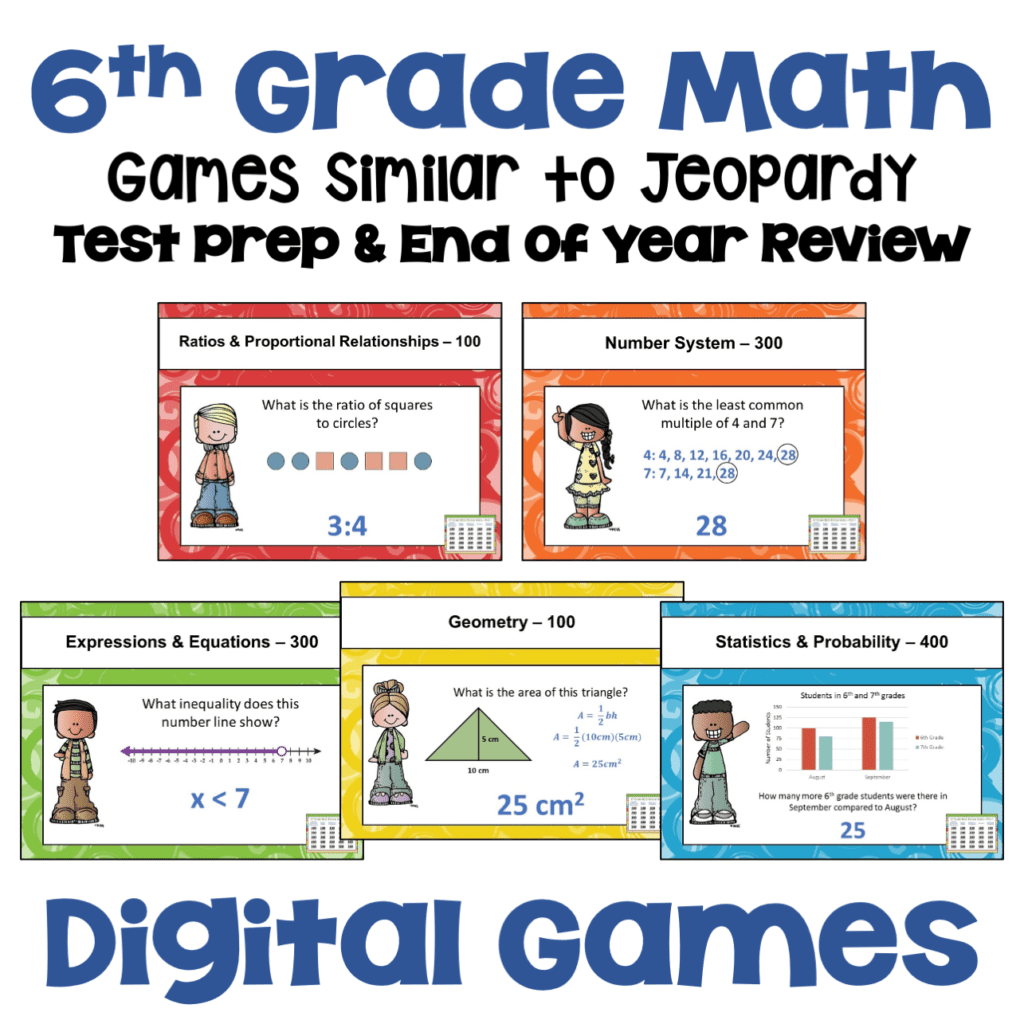
You might also be interested in the 6th Grade math review games for the end of the year test prep.

I hope these resources are helpful for you and your students starting 6th grade.

Filed Under: 6th Grade Math, Back to School Tagged With: Back to School 6th Grade, Back to School 6th Grade Math, First Week of School Activities for 6th Grade Math

Helpful Tips for Teaching Factors and Factor Pairs

May 12, 2022 by Sheila Cantonwine Leave a Comment

Teaching factors and factor pairs can be challenging for teachers to teach and students to learn. I find it helpful to break the steps into smaller pieces that are easier for students to master.

I enjoy resources that are differentiated and scaffolded. This means students start with easier questions then move to more challenging questions as they gain confidence.

It’s also really helpful if the resources are self-correcting so students can learn from their mistakes. This also saves a ton of time grading and is super helpful when tracking student data.

If your students need more practice with their multiplication facts, it might be helpful to have them practice with these Multiplication Fact Fluency Boom Cards beforehand. These decks of Boom Cards can be used over and over again until your students feel confident with the their multiplication facts.

For this particular deck of Boom cards on factors and factor pairs, there are 3 levels each with 12 questions. Students either type or click the answers so they’re interactive. The questions also increase in difficulty so students can gain confidence as they practice more questions.

Level 1 Questions with a Pink Background

Factors and Factor Pairs

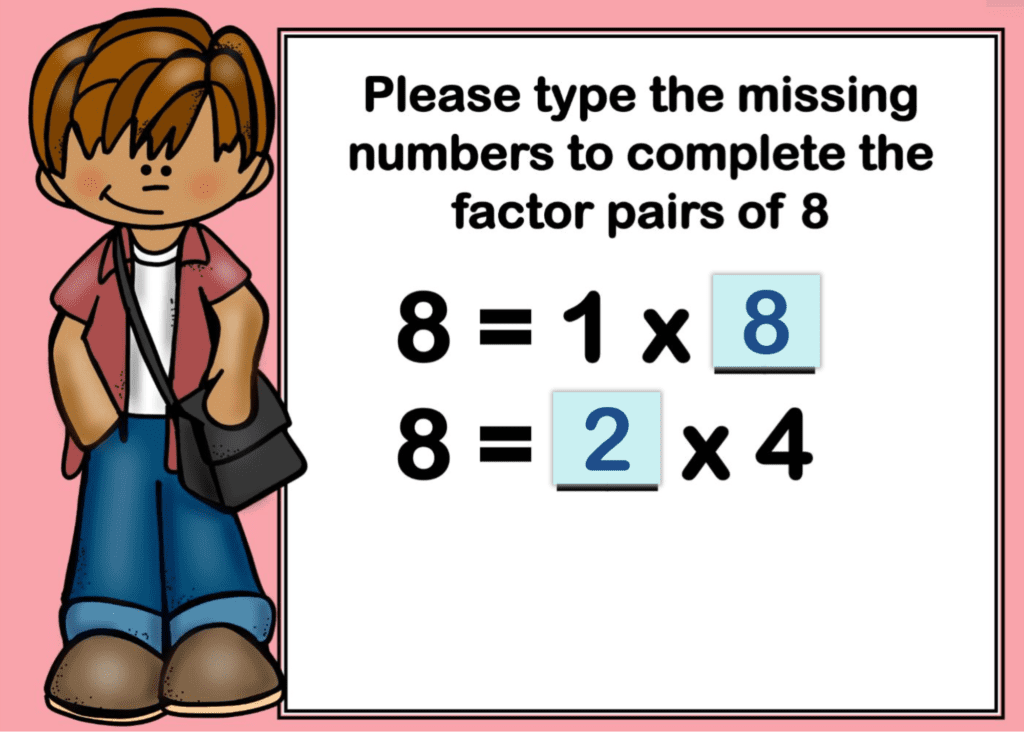
For the first 12 questions, students are asked to type the missing number to complete the factor pairs of a given number. Students complete either 2, 3, 4, and 5 factor pairs for each number. This is super helpful for students because they make the connection that a factor is a number that you can multiply with another number to get a product. 

They also gain a better understanding of factor pairs. For example, with this Boom card shown on the right, 2 and 4 are factor pairs for 8.

Level 2 Questions with a Blue Background

Helpful Tips for Teaching Factors and Factor Pairs

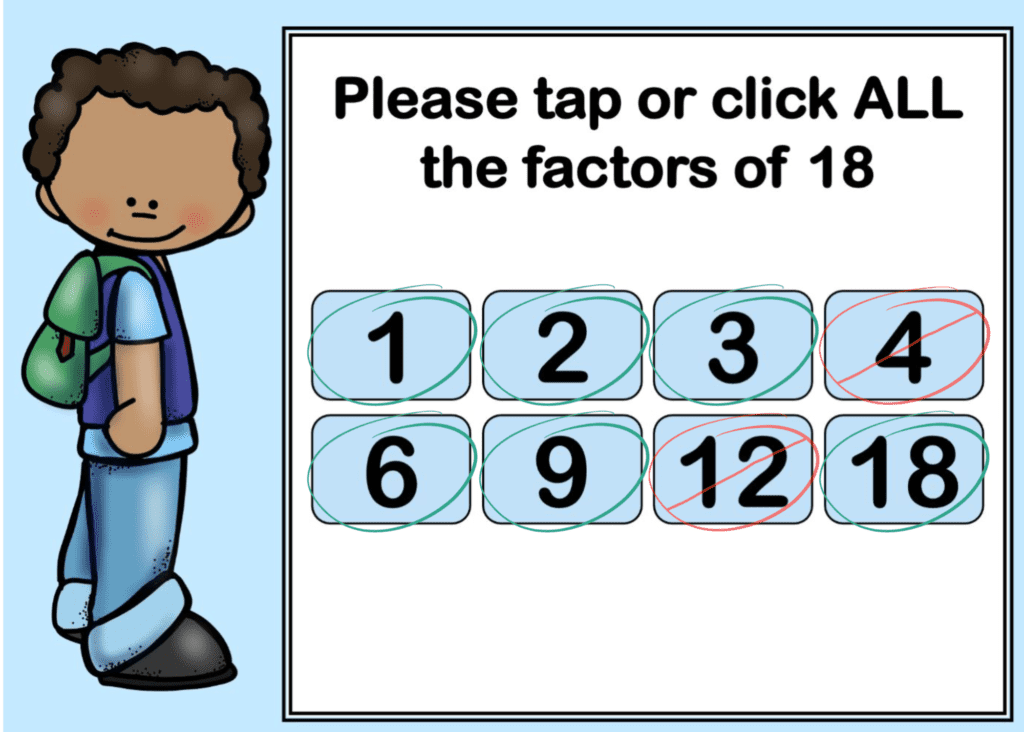
For the next 12 questions, students are asked to click or tap the factors of a given number. Questions have from 3 factors to 8 factors. The numbers are listed in order from smallest to largest to prepare students for finding common factors and greatest common factor.

For these questions, I have students always start with 1 and then find the factor pair which is 18 in this case. They can then decide if the next number is a factor. In this example, 2 is also a factor so they can select that as well as its factor pair of 9. Then they would finally decide if 3 is a factor, select it, then also select the factor pair of 6. I love that these are self correcting so students can see which ones they have missed and can make the appropriate corrections.

Level 3 Questions with a Green Background

Helpful Tips for Teaching Factors and Factor Pairs

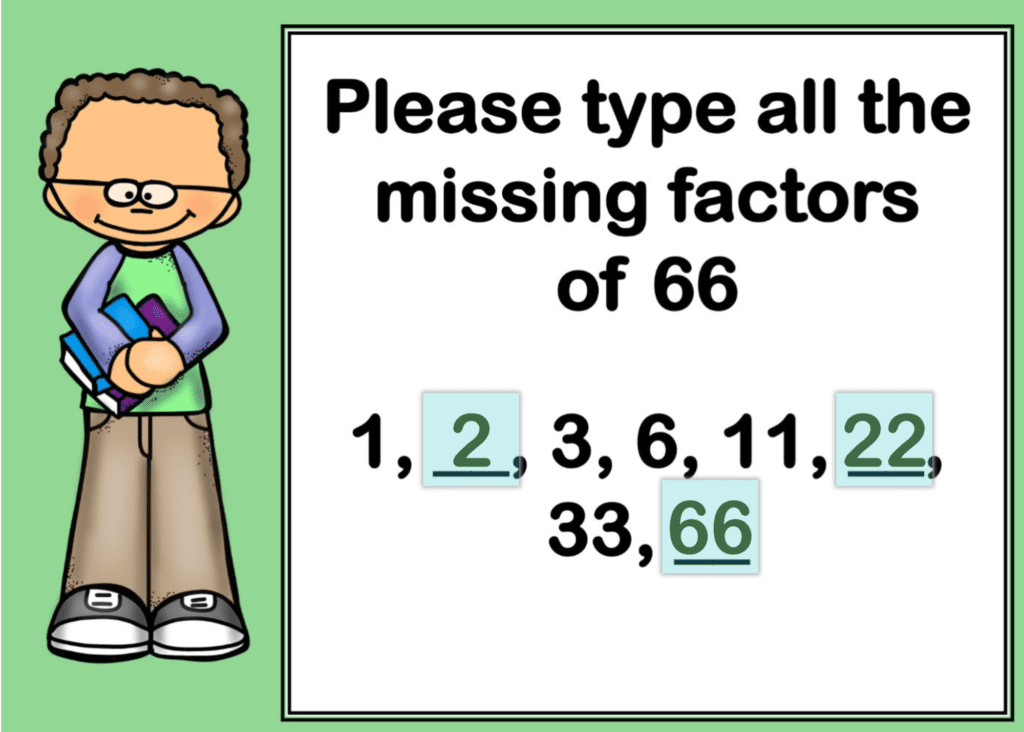
For the last 12 questions, students are asked to type all the missing factors of a number. Numbers are listed from smallest to largest.

For example, the factors of 66 are 1, 2, 3, 6, 11, 22, 33, and 66. Most of the numbers are filled in but they would need to type the 2, 22, and 66.

Again, I’d have them start with 1 and type its factor pair of 66. Then they can see that 33 is typed so the factor pair of that is 2. It’s like a puzzle for them to figure out the missing factors.

Having students see the factors in order from smallest numbers to largest numbers is important. They’ll need this skill when they are finding common factors and greatest common factor.

What Grades Would These Boom Cards Be Helpful For?

These cards are aligned to the common core 4.OA.B.4 and 6.NS.B.4 so they would be appropriate for both 4th graders and 6th graders. It’s especially helpful to review factors for 6th graders before they work on Greatest Common Factor.
What Do All the Cards Look Like?

To get a better feel of what the cards look like, check out this helpful video preview of the cards. You’ll get a good idea of the difficulty of the questions. You will also be able to see how the questions progress from easy to more challenging questions.

I really love using Boom cards because they are great on a laptop, desktop, Chromebook, tablet, or any other mobile device that can access the internet. They can even be used on your Smart Board. Here’s the best part – they are self-grading and allow you to track student progress. Plus, they’re no prep which means no printing, laminating, or storage.

If you are new to using Boom Cards, check out this post on 6 Reasons to Use Boom cards in Your Classroom. You might also be interested in creating your own Boom cards for your students or to earn extra income selling them. Check out this post on Creating Boom Cards.

Filed Under: 4th Grade Math, 6th Grade Math Tagged With: factor pairs, factors, Helpful tips for teaching factors and factor pairs, teaching factor pairs, teaching factors

Helpful Things to Consider When Creating a Tutoring Contract

April 22, 2022 by Sheila Cantonwine

Helpful Tips for Creating a Tutoring Contract or Agreement

Tutoring students can be a great source of income and incredibly gratifying. As a math teacher, I knew that some students needed more time with specific topics. Weekly tutoring sessions were a great way to help those students. Before you start, it’s essential to communicate effectively with students and parents to ensure that everyone understands the tutoring agreement. Check out these helpful things to consider when creating a tutoring contract or agreement.

1. How much will you charge per hour?

The average fee can range from $25 – $80 per hour, depending on the grade level you are teaching. Fees are generally lower for elementary grades and increase through middle and high school.

Think about your teaching and tutoring experience. You can usually charge more per hour when you have more experience.

When determining your hourly fee, you might consider whether you will have additional expenses like transportation to and from the tutoring location or rental fees for space. Also, consider printing costs if you provide worksheets or other printable materials like task cards.

Finally, consider a family discount if you will be tutoring more than one child in a family. A family discount is beneficial for summer math when parents want their children to avoid the summer slide.

2. How and when will the parents pay you?

Helpful Tips for Creating a Tutoring Contract or Agreement

Payment options is so important and very helpful to consider when creating a tutoring contract or agreement. Cash or check always works, but also consider using electronic payments like Venmo or PayPal for convenience. Some people use QR codes or credit card readers for their phones also but you’ll need to factor in the fees for that.

You should also decide if parents will pay weekly, monthly, or simply at the end of each session. Consider accepting payments before sessions to eliminate the possibility of frequently canceled sessions.

Helpful Tips for Creating a Tutoring Contract or Agreement

3. Where will the tutoring take place?

I have used my home, the library, and the school as different places to tutor. If you are using your home, make sure you have a comfortable place for students and parents to wait if they are early for their session and you are working with another student.

Always ask permission to use public places like libraries and schools. Some may require a fee to rent a room or space, so consider that when determining your costs.

4. How long will the sessions be?

Helpful Tips for Creating a Tutoring Contract or Agreement

For younger students, grades K – 2nd, I’d recommend 30-minute sessions. You could have 45-60 minute sessions for older students. I usually work with upper elementary and middle school students and have found that 45-50 minute sessions work well.

If you schedule them hourly, that gives you 10-15 minutes to transition from one student to the next. That’s perfect for you to wrap up one session and quickly prepare for the next. You’ll also need to have time to chat with parents to let them know about their child’s progress or any issues that you think should be addressed.

5. What is the cancellation policy?

Life can be so incredibly busy so I recommend a 24 hour cancellation policy. If students or parents provide 24 hour notice that they won’t be able to attend tutoring, you won’t charge them. If they cancel within 24 hours, you will charge them for the tutoring session.

You also need the option to cancel the session yourself in case of an emergency or illness. Again, I’d recommend a 24 hour policy with that. If the family has prepaid for the session and you cannot deliver, you will need to reschedule or reimburse them for the money they have paid.

6. How will you handle vacations or long term breaks in tutoring?

Over the summer months when working on summer math packets, make sure parents let you know about vacations and longer term breaks from tutoring. That way you can better plan your schedule. I worked with a family who traveled the entire month of July but wanted sessions in June and August. It was helpful to know so I could better help their children and adjust my schedule.

If parents ask for materials to work on over the vacation, make sure you can provide that as well.

7. Students who are late for tutoring sessions

Everyone is busy and there will be times when students are late. Depending on your schedule, it might not be possible to extend the lesson for students. For example, let’s say you have a student scheduled at 4pm and 5pm. If the student for your 4 pm session comes late at 4:15, and it’s a 45-minute session, I’d recommend working with them until 4:45 so you have time to prepare for your student at 5 pm.

From my experience, if parents know their students will be missing time with you, they’ll make an effort to be there on time since they’re paying for the entire session. On the occasions that I decided to extend the sessions for the students, I found that the students were late more often than not. The families must value your time as much as you respect theirs.

8. Services you will provide

Tutoring Summer Math

Always be clear about the services and materials you will provide. For example, I generally plan the lessons and provide all materials for the student. I also offer additional homework if requested by the parent.

Always keep family and student information confidential. Although this seems obvious, it’s also important to say that you will not complete the student’s assignments for them (yes, I’ve had parents request that!)

For more information on creating your tutoring contract, I’d suggest using this website:

https://www.free-legal-document.com/tutoring-contract.html

I hope this is helpful and that you learned helpful things to consider when creating a tutoring contract. I wish you lots of luck and great success in your tutoring business.

Filed Under: 4th Grade Math, 5th Grade Math, 6th Grade Math, Summer Math Tagged With: helpful things to consider when creating a tutoring contract, tutoring, tutoring agreement, tutoring contract

Easter Resources Your Upper Elementary Math Students Will Love

March 22, 2022 by Sheila Cantonwine

Spring is in the air, and your students are excited about the warmer days. Like you, they may be counting the days until spring break or even summer break. Now is a great time to use some fun and engaging spring and Easter-themed resources in your classroom. Using digital and printable resources will also help you reach all your students. Differentiation is also helpful because students can start with easier questions then move to more challenging questions as they gain confidence. Check out these Easter resources your upper elementary math students will love.

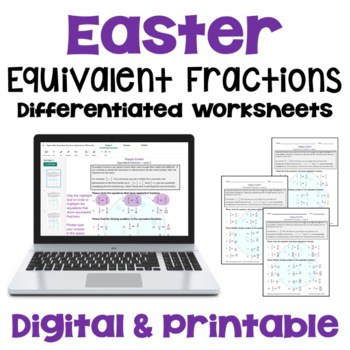
1. Equivalent Fractions Differentiated Worksheets

Easter Resources Your Upper Elementary Math Students Will Love

If your students need more practice with Equivalent Fractions, these differentiated worksheets are perfect. Students start with level 1 (the easiest questions) then move to levels 2 and 3 (more challenging questions) as they gain more confidence.

You can also find these worksheets in the Easter Fraction Bundle and Easter Math Bundle. These bundles would make great sub plans, morning work, or even math centers for your classroom.

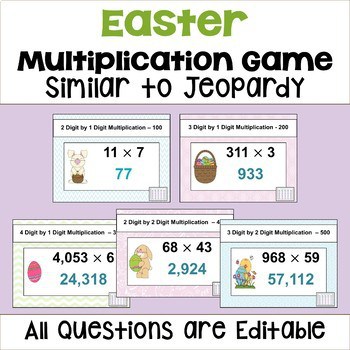
2. Easter Multiplication Game Similar to Jeopardy

Easter Multiplication Game Similar to Jeopardy

Everyone loves a fun game of Jeopardy. This game is great if your students are excited about spring break and have a hard time focusing. They’ll have so much fun playing the game that they’ll forget their practicing multi-digit multiplication.

Categories and questions are editable so that you can customize them for your class. You can use the questions as written, change a few, or completely customize them to your needs. It’s completely flexible.

Questions are linked back to the interactive game board to make it easy to navigate. Once you visit a question, the link on the game board will change from purple to grey to let you know that you have already used that question.

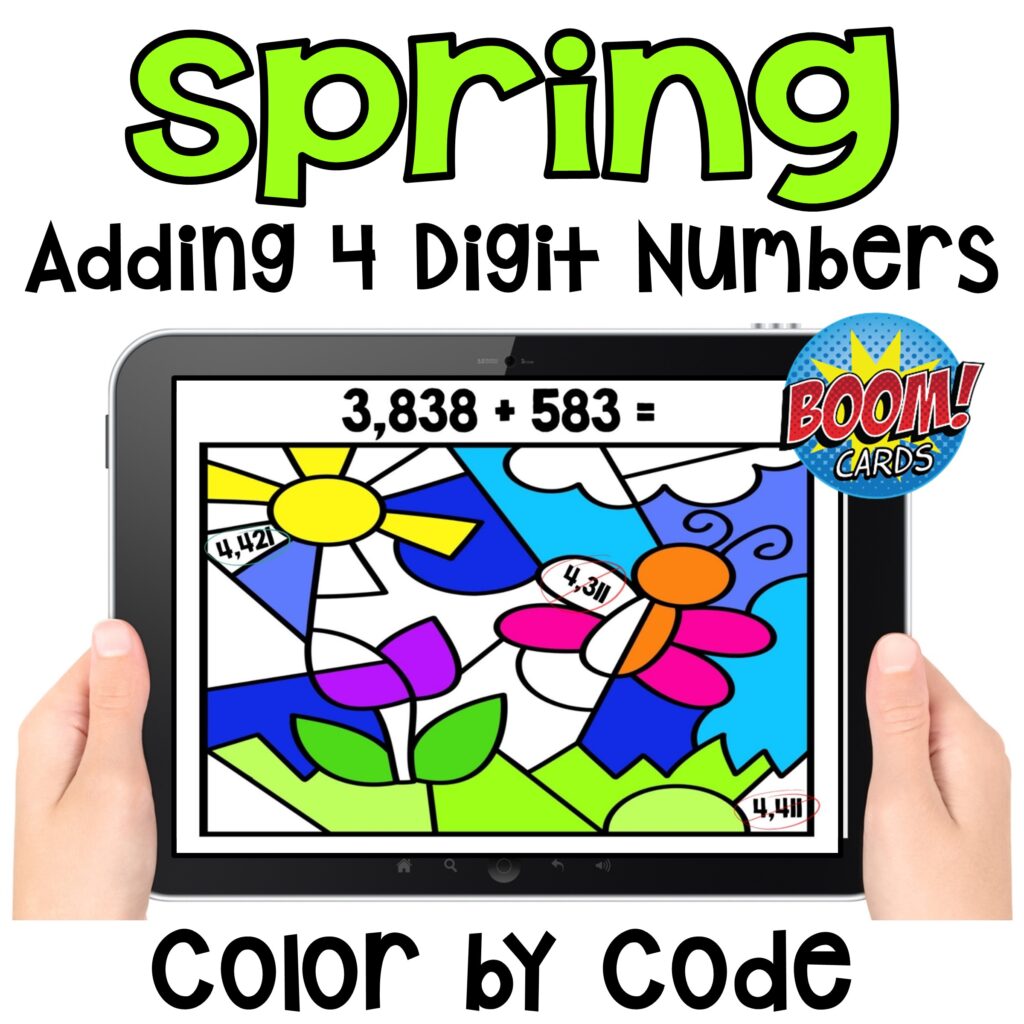
3. Spring Themed Adding 4 Digit Numbers Color by Code Boom Cards

Students love color by code resources. Using digital color by code is great because there is no prep and grading. These spring-themed Boom cards are so much fun because they are interactive, and students receive immediate feedback so they can learn from their mistakes.

Students digitally color in two spring-themed images while answering twenty-two questions on adding four-digit numbers.
You can play the four first cards of the deck in this preview to check out these Boom cards.

Check out this blog post on Boom cards if you’d like to learn more about using them in your classroom.

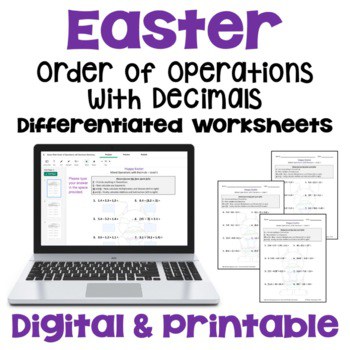
4. Easter Order of Operations with Decimals

Easter Resources Your Upper Elementary Math Students Will Love

Are you looking for a fun way to practice Order of Operations with Decimals this spring? These 3 Easter-themed worksheets are differentiated and cover mixed operations with decimals. Students use Please Excuse My Dear Aunt Sally and order of operations to solve these questions with addition, subtraction, multiplication, and division. A helpful gray box at the top of each page explains the steps for multiplying decimals.

These worksheets are also part of a discounted Easter Decimal Worksheet Bundle. They would be great for Math Centers, Morning Work, Homework, Early Finishers, Review Sheets, or Sub Plans.

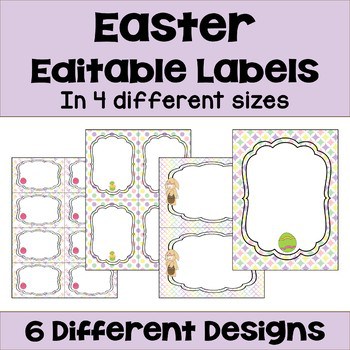
5. Easter Editable Labels and Gift Tags

Easter Editable Labels

These editable labels for Easter are perfect for creating your own task cards. You can even ask your students to write the questions for an additional fun activity. They will love writing math questions while trying to stump their classmates. They are also great for classroom decor or labels or bulletin boards. They also make great gift tags for Easter goodies for your students.

I hope these resources are all helpful for you in your classroom.

You might also be interested in other Easter and Spring-themed resources in my TpT store.

Filed Under: 4th Grade Math, 5th Grade Math, 6th Grade Math, Holidays Tagged With: Easter math, Easter math 4th grade, Easter math 5th grade, Easter math 6th grade, Easter math resources, Easter math upper elementary

Math Review Games Your Students Will Love

March 11, 2022 by Sheila Cantonwine

Math Review Games Your Students Will Love.png

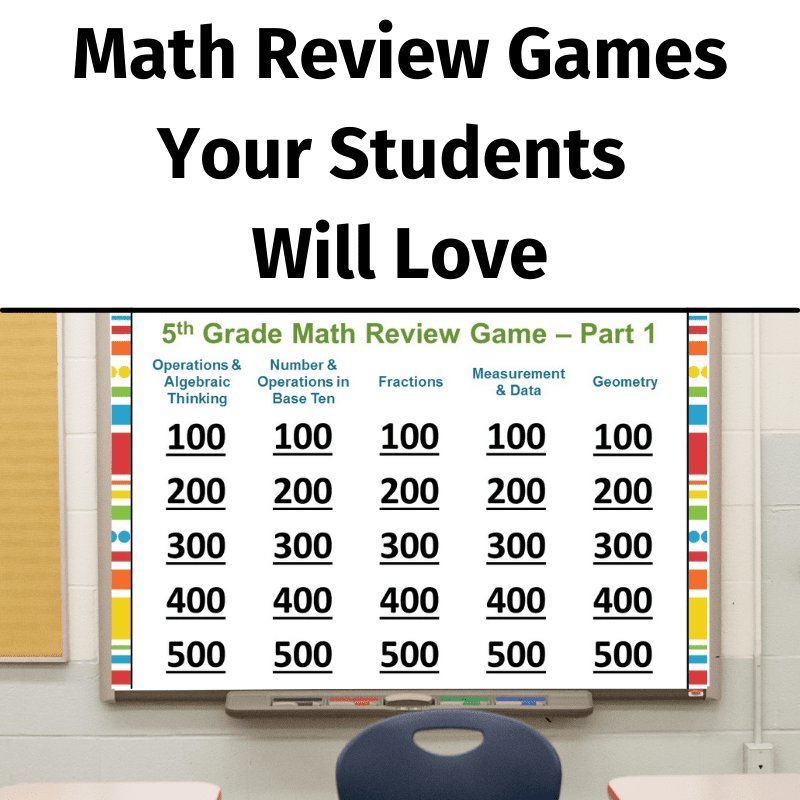
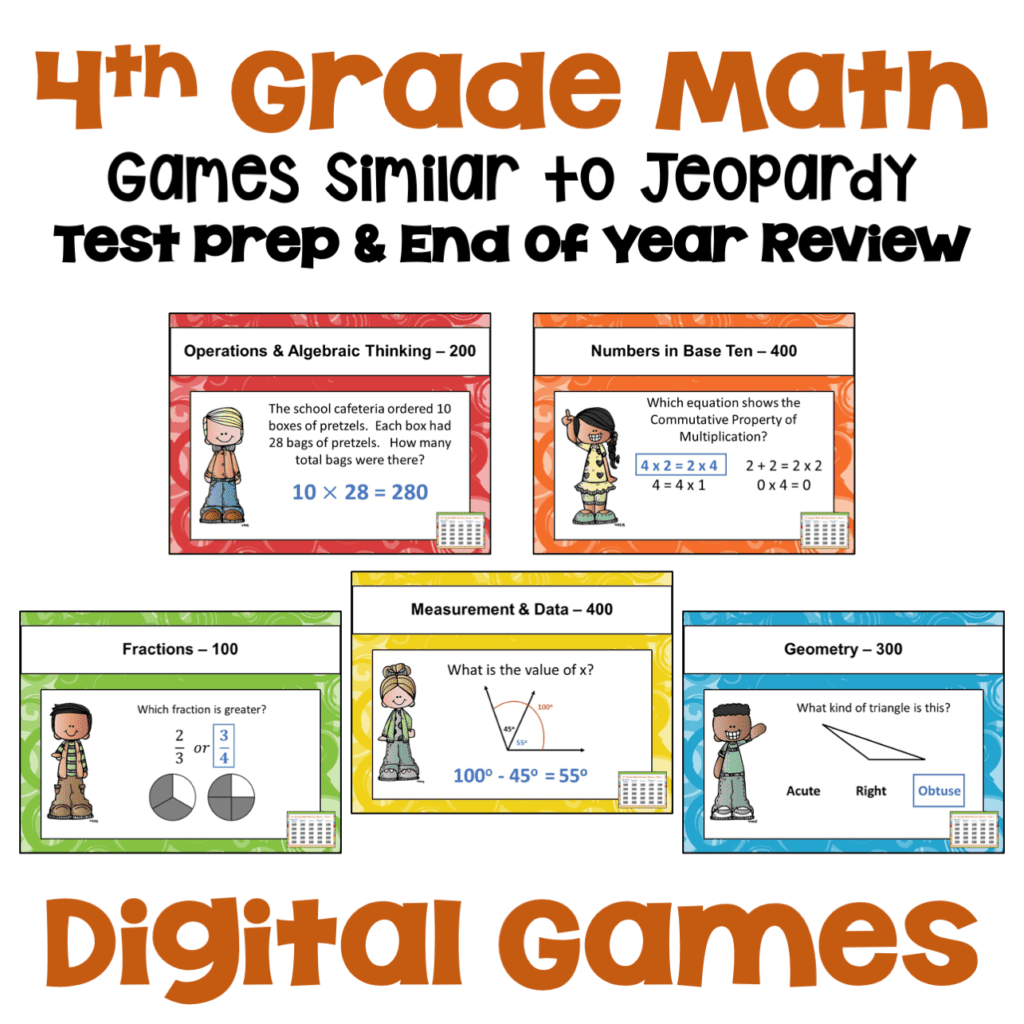
There are many different ways to review math for end-of-year testing. You can use worksheets, task cards, Boom cards, or games. This article focuses on math review games your students will love. Specifically, I want to talk about games that are similar to Jeopardy.

I enjoy using Jeopardy-style games because students love playing them. They usually have so much fun playing the game that they forget that they’re doing math.

They can also work in groups which takes the pressure off knowing all the correct answers. They also learn how to collaborate with their peers.
Here are some tips for choosing math review games that your students will love.
Consider Games with Editable Questions

4th Grade Math Games

All of the PowerPoint games in my TpT store feature editable questions. That means you can change any of the questions and answers to customize the difficulty of the questions. You can use some or all of the questions. It’s completely flexible.

For an extra activity, consider having your students write some of the questions themselves. They’ll love the opportunity to stump their classmates with their review questions. Plus, you’ll have multiple game versions that you can save for future years.

Make It Fun

Math Review Games Your Students Will Love

I always suggest assigning only positive points for correct answers. Subtracting points for incorrect answers prevents students from wanting to participate. Positive points also create a safe zone for students to try without the worry of answering incorrectly in front of their classmates.

Having the students work in groups also makes the game more fun. You can divide your class into four or five teams with a handful of students in each team. Assign a team leader who will answer the questions, so you don’t have many students shouting answers at you.

Be generous with the time they have for each question. Some questions require computation and will require more time than multiple choice answers.

Math Review Games Your Students Will Love

Award Fun Prizes for the Winning Team

Students tend to work a little harder when they’re excited about the winning prize. Homework passes are usually my go-to for prizes. Homework passes allow students to miss a day of homework when they’re busy with after-school activities. Students valued those homework passes.

Candy or baked goods are always desirable. Make sure you consider food allergies and sensitivities when selecting any food items. Store-bought foods with easy-to-read labels will help students who need to know the ingredients.

Use Games as Rewards

I also use games as a reward for good behavior. At the beginning of the week, I’d write the word GAME on the whiteboard. When the class was loud or had difficulties settling down, I’d quietly erase one of the letters. If they didn’t settle down after a minute or two, I’d erase a second letter. They knew they had to have all four letters in the word GAME on the board by Friday morning to play the game. That helped them settle down pretty quickly.

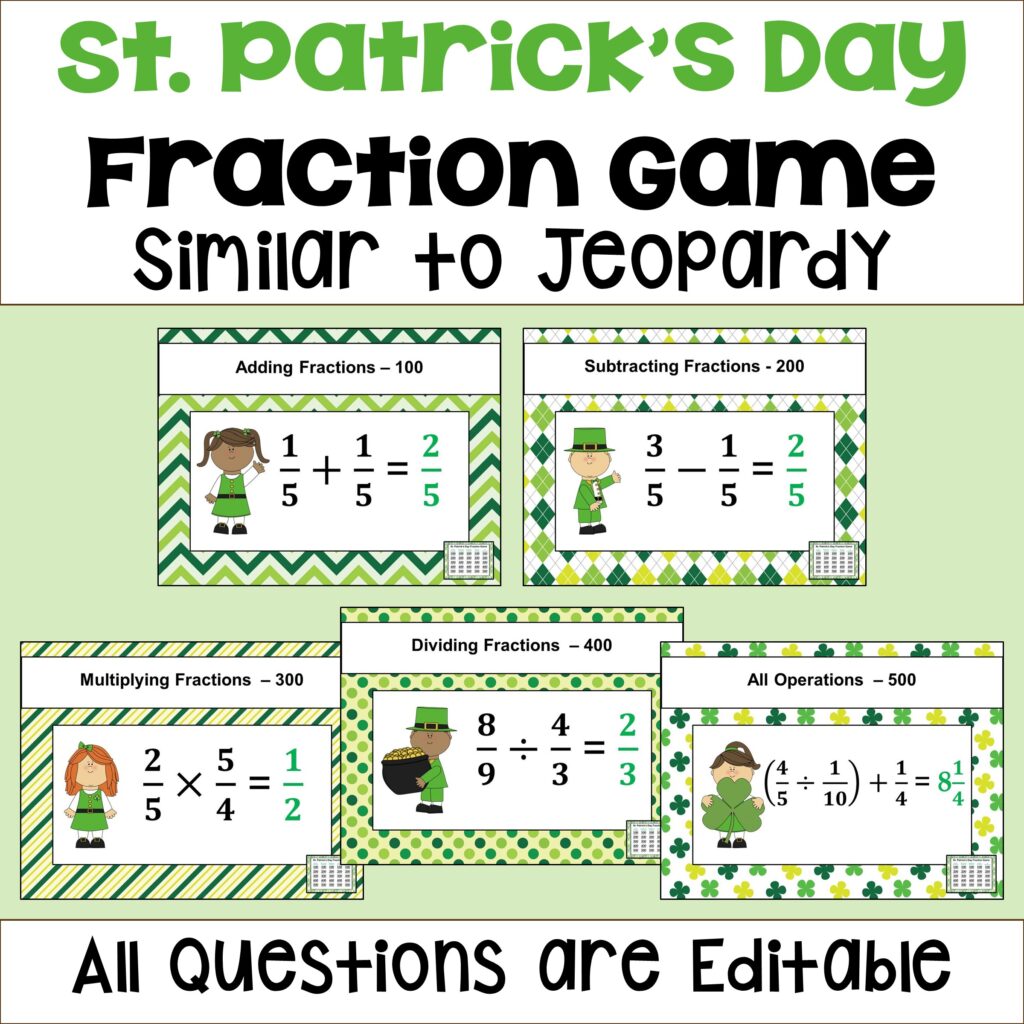
If they were missing letters, I’d give them back during class when they actively participated or were kind to each other. It was a great way to encourage positive behavior. Luckily I had a lot of games in my TpT store to choose from each week. My students particularly enjoyed holiday-themed games like this St. Patrick’s Day Game.

Filed Under: 4th Grade Math, 5th Grade Math, 6th Grade Math, Test Prep and Review Tagged With: 4th grade math games, 5th grade math games, 6th grade math games, Jeopardy games for 4th grade, Jeopardy games for 5th grade, Jeopardy games for 6th grade, Math Review Games

Summer Math Your Rising 7th Grader Will Love

March 9, 2022 by Sheila Cantonwine

Summer Math Review of 6th Grade

It is important to have summer math activities that your rising 7th grader will love.

When students take a little time each week to practice and review their math skills, it will make a big difference when they go back to school. It will make the transition to the next math level so much easier. Plus, they won’t worry about starting the year already being behind.

As a teacher and homeschooling mom, I know how difficult it can be to find a math packet that your child will complete. They must cover all the math topics without being too overwhelming.

Here are a couple of suggestions that might make summer math a little easier for you and your rising 7th grader.

Complete 2 Pages Every Week

Having students practice only two pages every week can be an excellent way to do a little work at a time. So many students wait until the week or night before school to review. That’s not enough time. Plus, completing 15-20 pages of summer math in one sitting is so intimidating.

I gave my children and students math packets divided into multiple-choice and skills pages. Doing one of each (2 pages total) was very manageable over the summer months.

Multiple Choice Questions

Students love multiple-choice questions because they have options. The questions are usually not as intimidating as short answers or fill-in-the-blank questions. They are also familiar because they are similar to the questions for standardized testing.

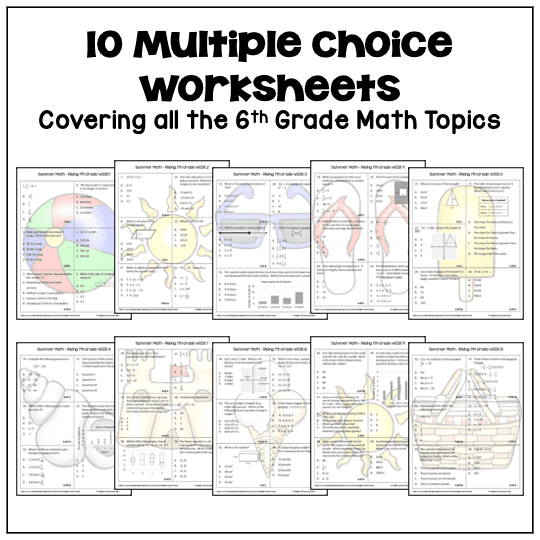
The multiple-choice questions must cover all the topics for 6th-grade math. Reviewing all the standards is the best way to prepare students for 7th-grade math. Listing the common core standard for each question is also helpful. That way, teachers, tutors, or parents know which common core standards to review. Sometimes, students need to relearn specific skills before beginning the school year.

Answer keys are a huge time saver too. If you are a parent helping your student with summer math, I suggest having your child grade their summer math. They can do this every week after they complete the two suggested pages. That way, they can see what they did wrong and learn from their mistakes.

Skills pages for Your Rising 7th Grader

Summer Math Your Rising 7th Grader Will Love

As a math teacher, I’ve found that every grade level has its own set of math skills that need a little more practice to master. Whereas the multiple-choice questions make sure students review ALL the math topics for 6th grade, the skills pages give a deeper dive and more practice.

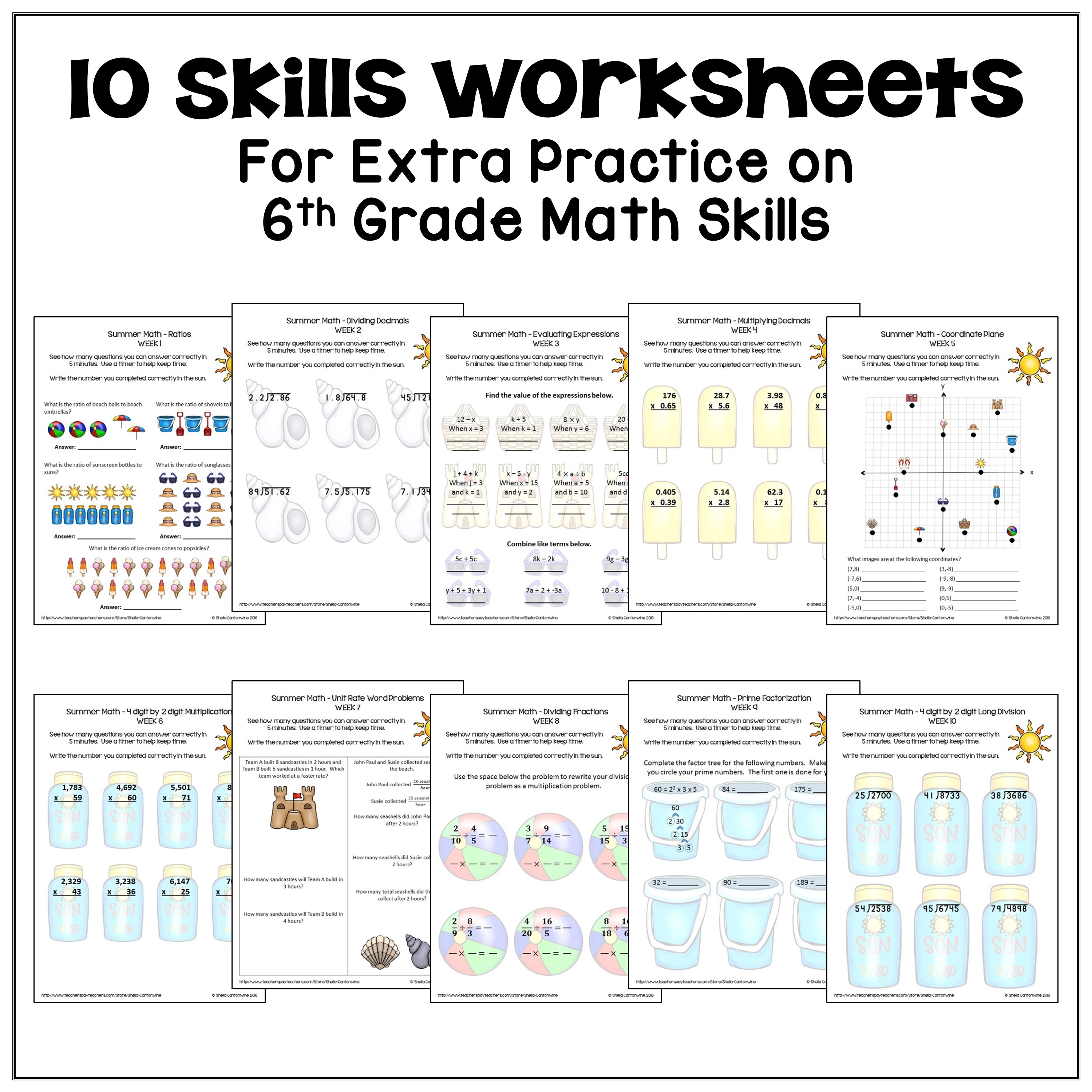
Ratios, Dividing Decimals, Evaluating Expressions, and Multiplying Decimals, are some of the topics for 6th grade. Others include Coordinate Plane, 4 Digit by 2 Digit Multiplication, Unit Rate Word Problems, Dividing Fractions, Prime Factorization, and 4 Digit by 2 Digit Long Division.

I hope this is helpful, and I hope your rising 7th grader enjoys using this summer math packet.

Filed Under: 6th Grade Math, Summer Math Tagged With: Summer Math, Summer Math Packet, summer math review of 6th, summer math rising 7th grade

Practice for End of Year Math Testing Using Task Cards

March 8, 2022 by Sheila Cantonwine

Practice for End of Year Math Testing Using Task Cards

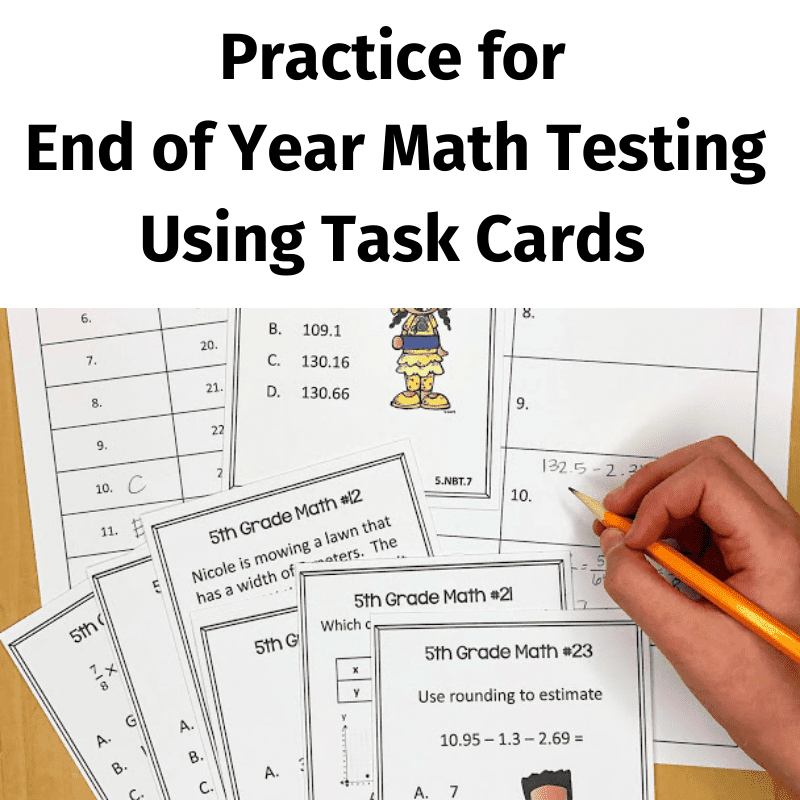
Practice for end-of-year math testing using task cards is a great way for your students to review all the math topics while having a little fun. One of the great things about task cards is that there are so many different ways that you can use them in your classroom. Use them in a scavenger hunt, with Scoot, as math centers or a game of Around the Room. You can even use them for early finishers, sub plans, morning work, or bell questions.

Task cards are also a great way for students to get up and move around the room. They can move from desk to desk with Scoot, or around the room for mather centers, scavenger hunts, or around the room. They are also wonderful for collaborative work where students can work in teams or groups.

Here are some helpful hints when choosing task cards to practice for end of year math testing:

1. Laminate the Task Cards for Practice for End of Year Math Testing Using Task Cards

Laminate your task cards so you can use them throughout the year as spiraling activities or review. You can even purchase the grade level below to assess your students at the beginning of the school year. For example, if you’re a 5th-grade teacher, purchase the 4th-grade task cards for a fun review at the beginning of the year. Laminating is also helpful for keeping the task cards in great condition for multiple years so you can use them with more than one class.

2. Use the Math Standard for Each Task Card

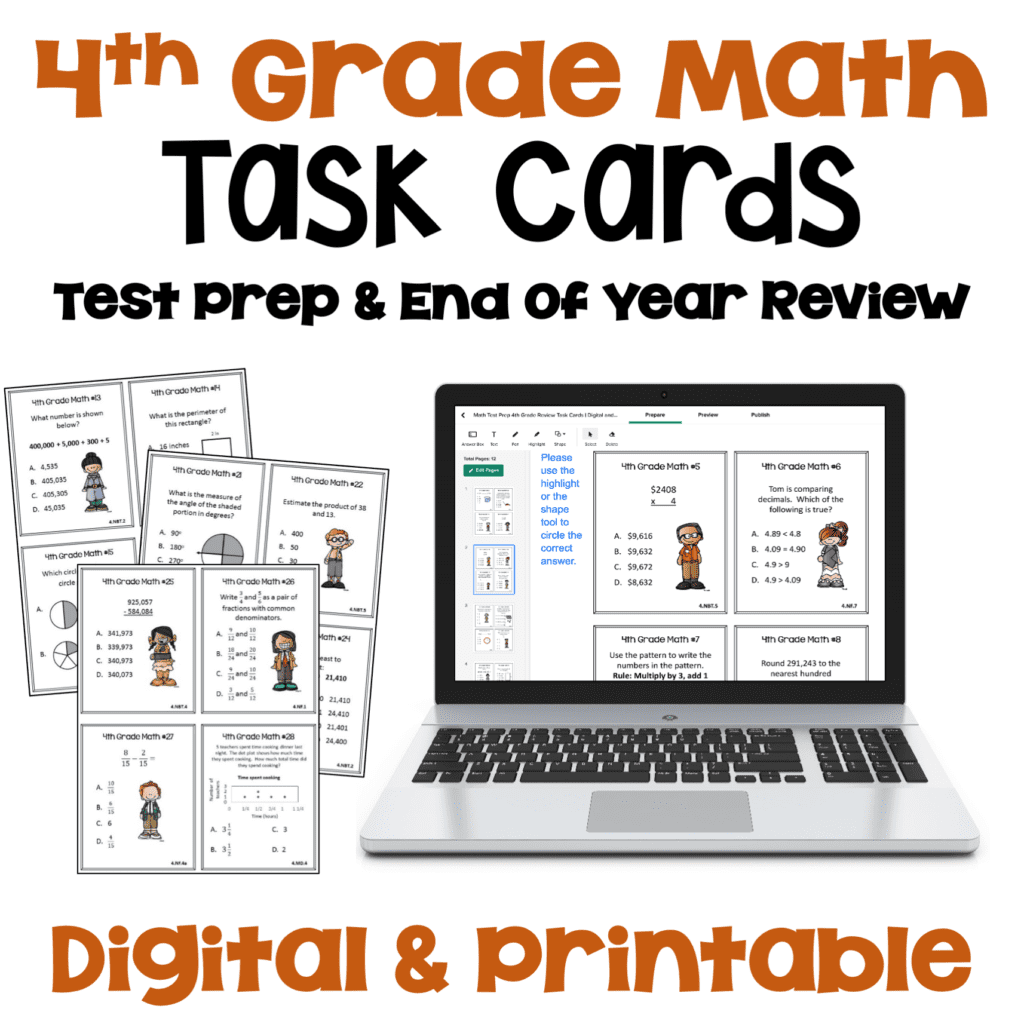
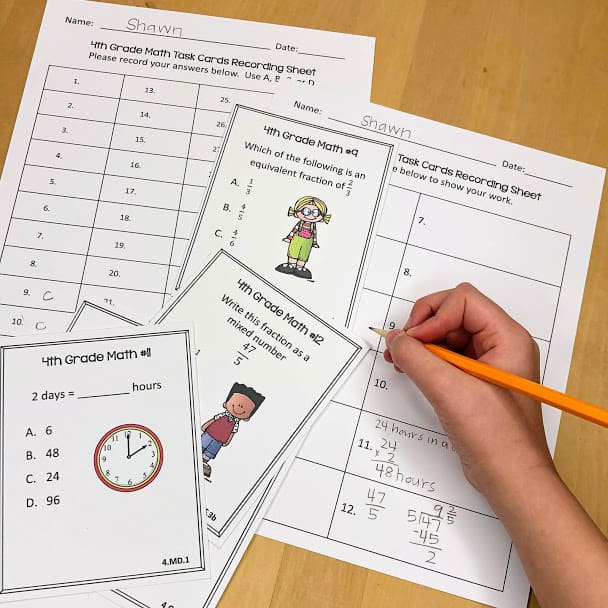
4th Grade Math Task Cards

This makes it super easy to review. Let’s say you have your students complete the task cards right before the exam and you notice that a lot of students missed question 11. If you look at the bottom of the task card, you can see the math standard for that question. Then you know you’ll need to review that standard before the exam.

In the same respect, if most of your students answered a question correctly, then you know you won’t need to spend as much time reviewing that particular topic at the end of the school year.

3. Task cards should cover ALL the math topics Practice for End of Year Math Testing Using Task Cards

Choose task cards that cover ALL the math topics to make sure your students are fully prepared. We sometimes have a tendency to review the topics we enjoy teaching while neglecting the ones we don’t enjoy. I definitely have some favorite math topics (fractions, equations, and integers) and some less favorite topics (probability and geometry) so it was always a challenge to review the topics I didn’t enjoy teaching in the first place.

Having task cards that have all the questions is a great way to make sure you effectively covered all the topics throughout the school year.

4. Make sure the recording sheet and answer key is provided.

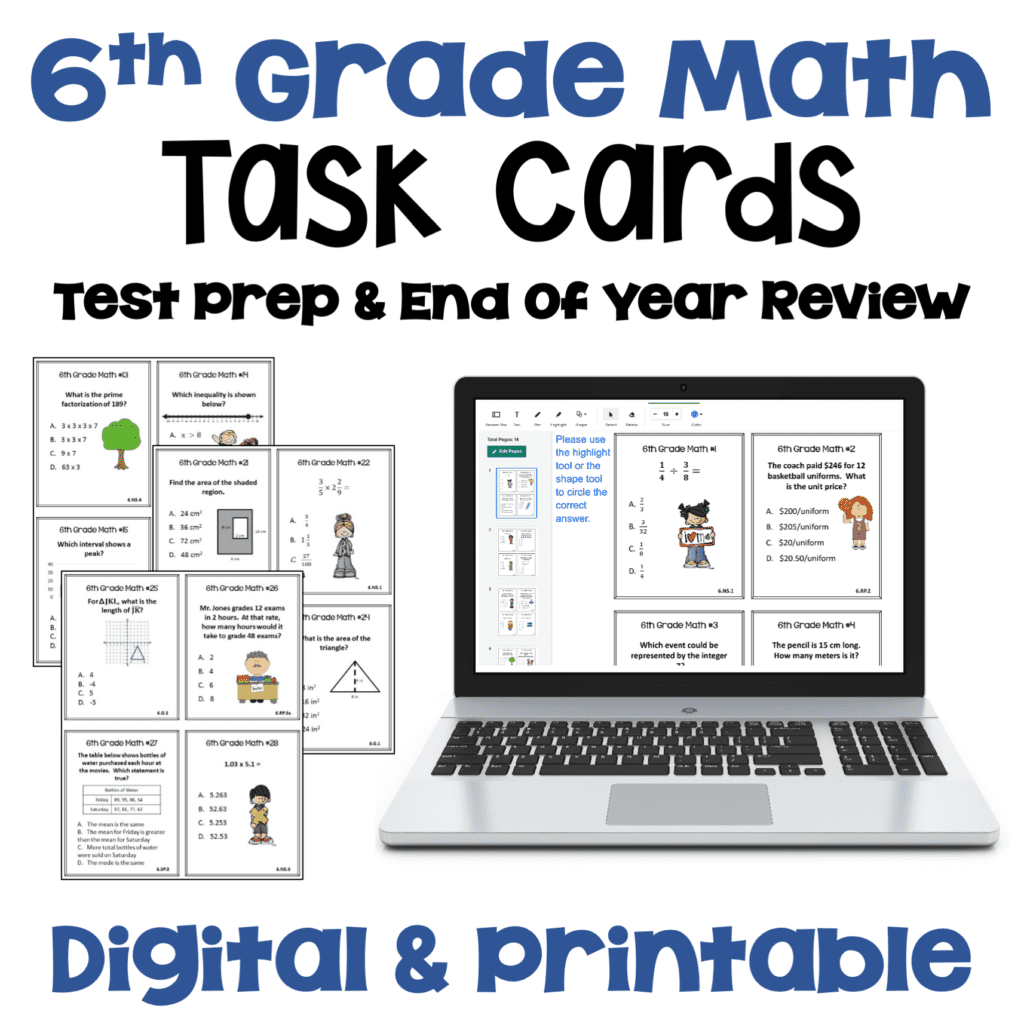
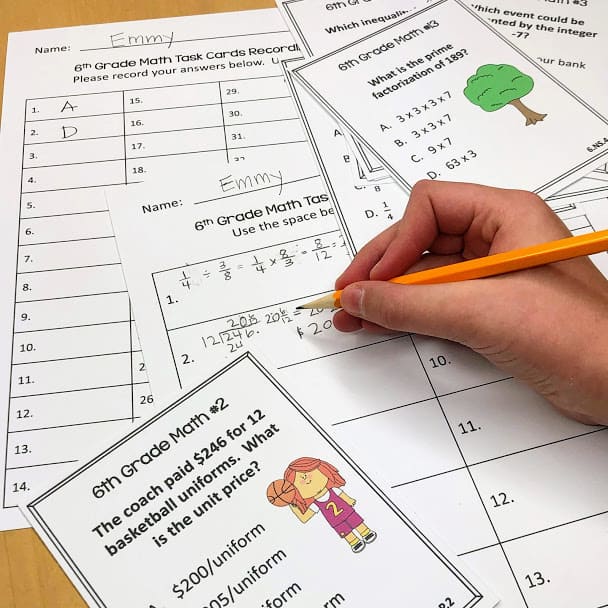
6th Grade Math Task Cards

Having the answer key is a huge time saver and an absolute must-have for me. My time is precious and life is so busy so having the answer keys provided is a huge time saver for me. With task cards, it’s super easy to grade when students put their answers on a recording sheet so you can quickly grade all the task cards at once.

As an added bonus, I often used the answer keys for students to self-grade. After they would complete the task cards, I’d have them compare their answers to the answer key to see what questions they missed. This is a great way for them to learn from their mistakes.

5. Use the task cards throughout the year in multiple ways for Practice for End of Year Math Testing Using Task Cards

Use the task cards all year long as morning work, spiral review, or math centers so students don’t feel overwhelmed with ALL the questions at once. Working on all the task cards in one sitting can be overwhelming at first so breaking it up into smaller groups at a time makes it more manageable.

I like to break them up by standard. For example, one day you could review all the task cards with Measurement and Data, and the next day you could review all the task cards with Geometry. You could also have them review a set of task cards after you teach each topic throughout the year.

6. Although printable task cards are best used in the classroom, having a digital option can be helpful for absent students.

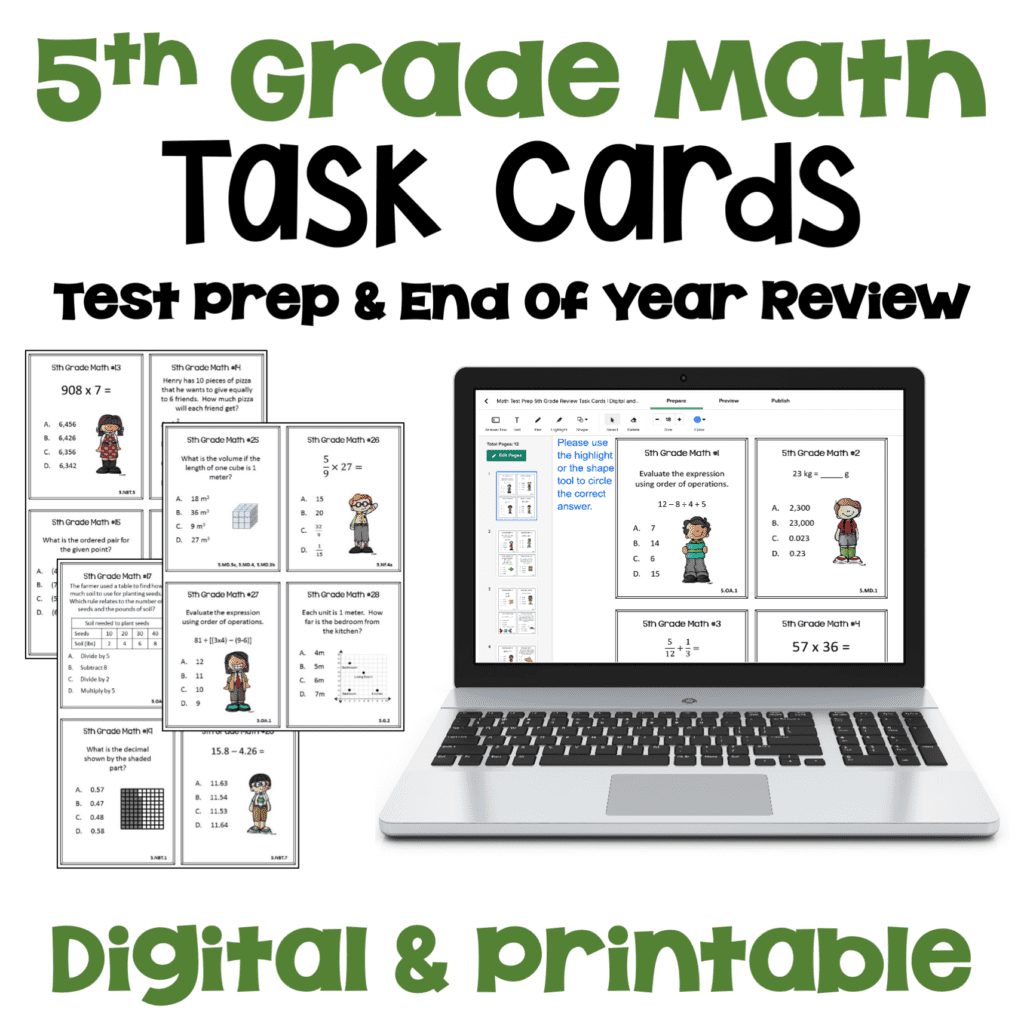
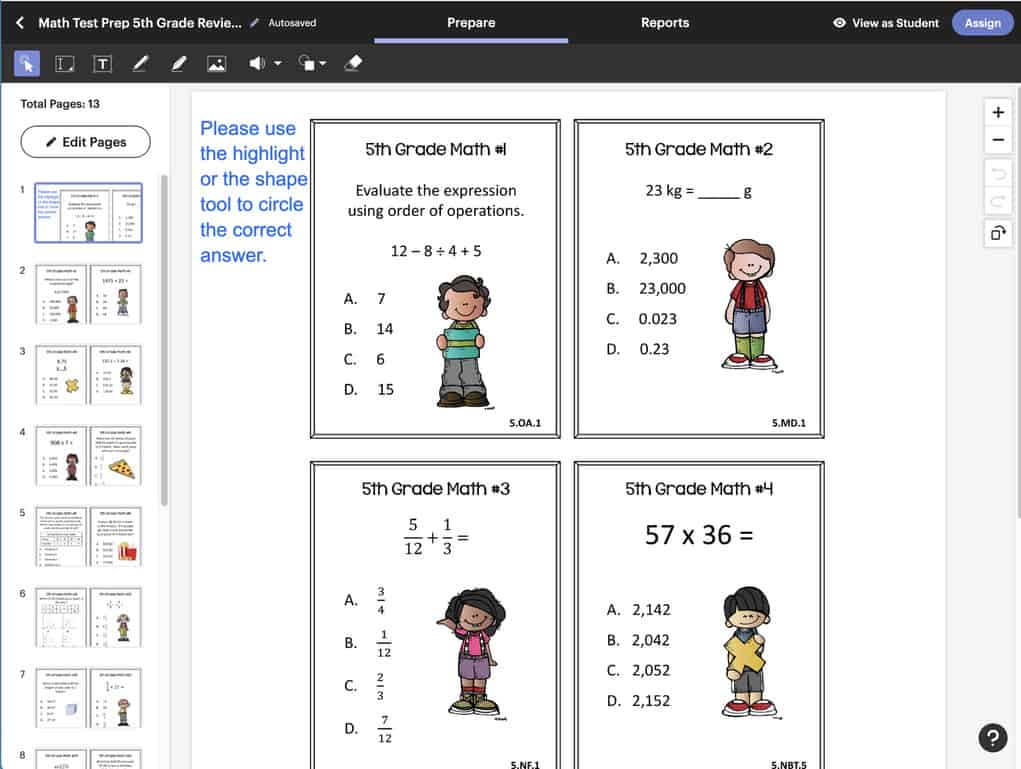
5th Grade Math Task Cards

Having both digital and printable options included is helpful for students both in-class and learning from home. All of my task cards have a digital component included so it’s easy for students to also complete the task cards on their computers if they need to.

Having a digital version is also a great way to save paper, toner, and storage containers since everything is stored online. Many state testing is moving to computers so this also gives students additional practice with test-taking.


In addition to having worksheets or practice tests, I also had my students work on their math facts throughout the year. I am a huge fan of using grill and drill in my math classes. When students know their basic math facts, it definitely makes test-taking so much easier for them.

Here are some 4th-grade math, 5th-grade math, and 6th-grade math task cards that might be helpful for your students for end-of-year review and testing.

4th Grade Math
5th Grade Math
6th Grade Math

Filed Under: 4th Grade Math, 5th Grade Math, 6th Grade Math, Test Prep and Review Tagged With: end of year review, task cards

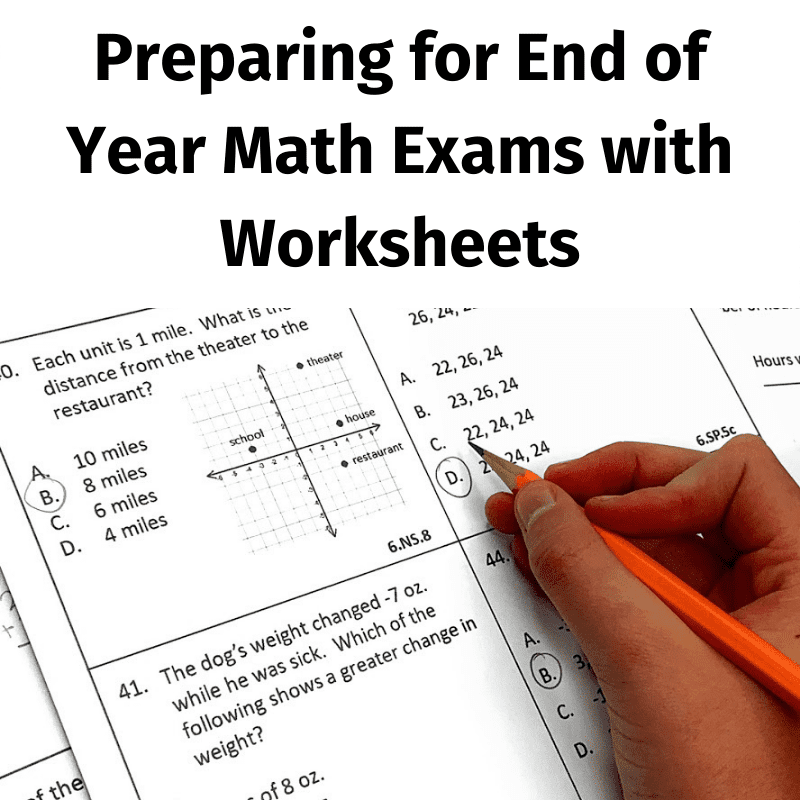
Preparing for End of Year Math Exams with Worksheets

February 18, 2022 by Sheila Cantonwine

Preparing for end of year math exams can sometimes be stressful. There’s so much information that needs to be reviewed and it’s totally overwhelming for students and teachers too.

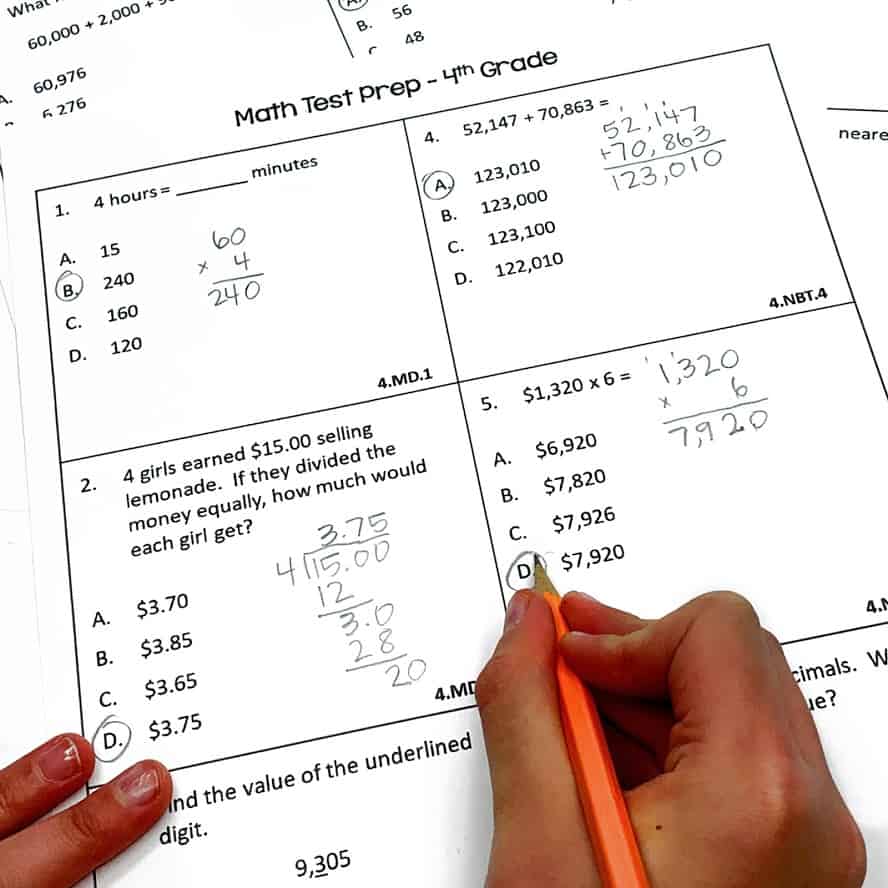
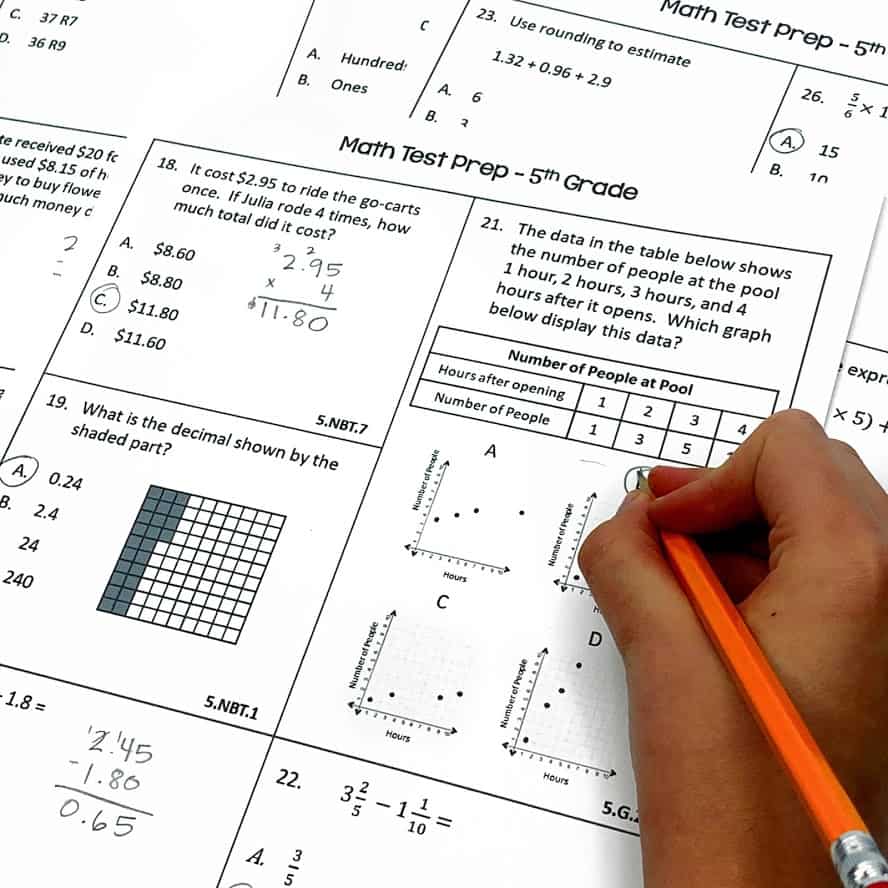
One of the ways I review math topics with my students is by using worksheets also known as practice tests. It’s the most traditional form of review or test prep and is very effective for most students.

Here are a couple of things to keep in mind when Preparing for End of Year Math Exams with Worksheets:

1. Know the Standards for Each Question

It’s always helpful if the math standard is listed on each question. That way, you can easily see what topics might need additional review before the end-of-year exam.

Preparing for End of Year Math Exams with Worksheets

2. Worksheets Should Resemble Actual Exam

Use worksheets or practice tests that most resemble the end of year testing for your students.  For example, if the test is multiple-choice, then make sure the worksheets or practice tests are also multiple-choice. This helps students practice their test-taking skills while reviewing the math topics. There is always such an emphasis on students showing their work on worksheets so it can sometimes be a challenge to find multiple-choice options.

3. Choose Resources that Cover Every Topic on the Exam

Select resources that cover ALL the math topics to make sure your students are fully prepared. We sometimes have a tendency to review the topics we enjoy teaching while neglecting the ones we don’t enjoy. I definitely have some favorite math topics (fractions, equations, and integers) and some less favorite topics (probability and geometry) so it was always a challenge to review the topics I didn’t enjoy teaching in the first place.

Preparing for End of Year Math Exams with Worksheets

4. Use the Worksheets Individually

Use the worksheets in chunks as morning work, spiral review, or math centers so students don’t feel overwhelmed with ALL the questions at once. If the worksheets cover all the math topics, students would be answering 50 or more questions. Working on all of those in one sitting can be overwhelming at first so breaking it up into one page at a time makes it more manageable.

5. Digital and Printable Included

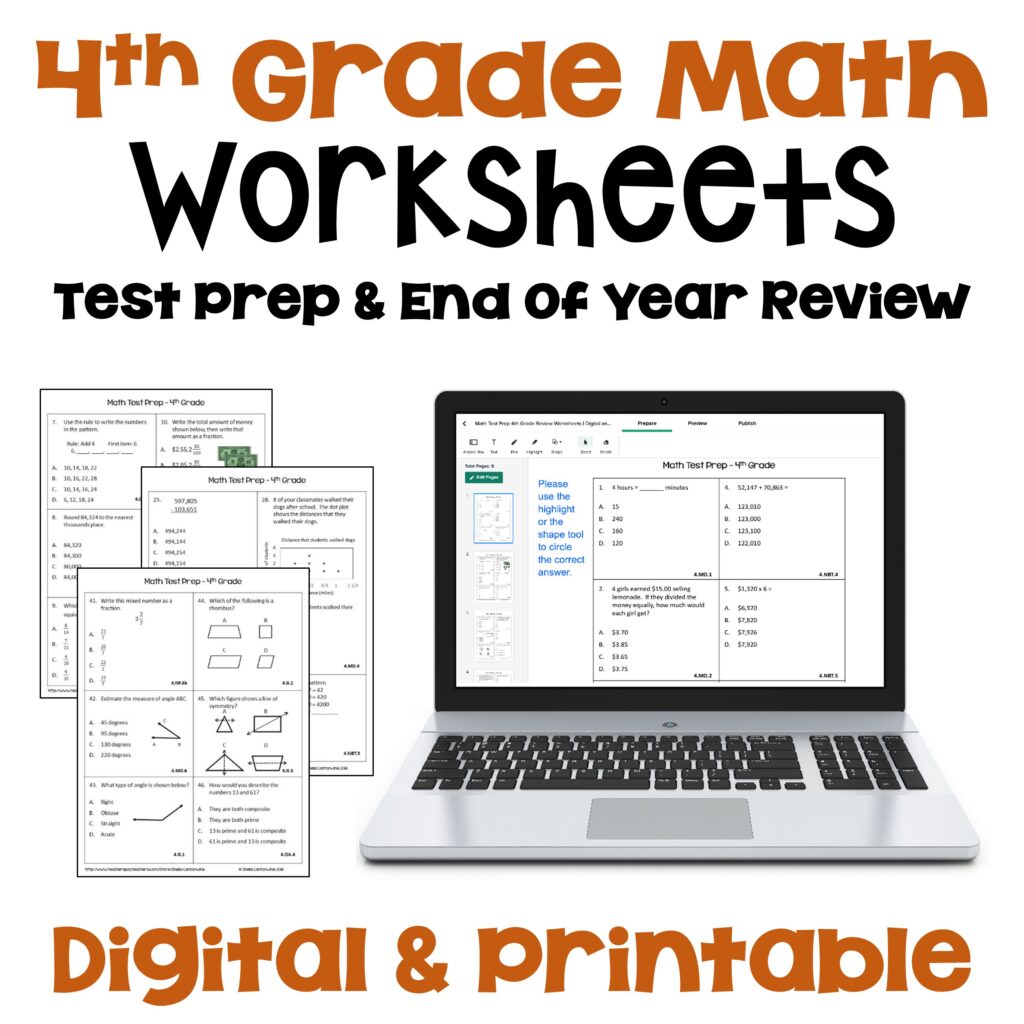
Having both digital and printable options included is helpful for students both in-class and learning from home. Some states are even moving to online testing so having your students practice answering the questions online is super helpful in preparing them for the end-of-year exam.

6. Answer Keys are a Must

Make sure the answer key is provided.  Don’t waste your precious time having to create one. I can’t tell you how many resources I’ve used over the years that didn’t have one provided. It was such a struggle finding time to create one in the super busy days at the end of the school year. Plus, when you have an answer key, you can have your students self-grade the worksheets to learn from their mistakes.


In addition to having worksheets or practice tests, I also had my students work on their math facts throughout the year. I am a huge fan of using grill and drill in my math classes. When students know their basic math facts, it definitely makes test-taking so much easier for them.

Here are some 4th grade math, 5th grade math, and 6th grade math worksheets that might be helpful for your students for end-of-year review and testing.

4th Grade Math Test Prep and Review Worksheets
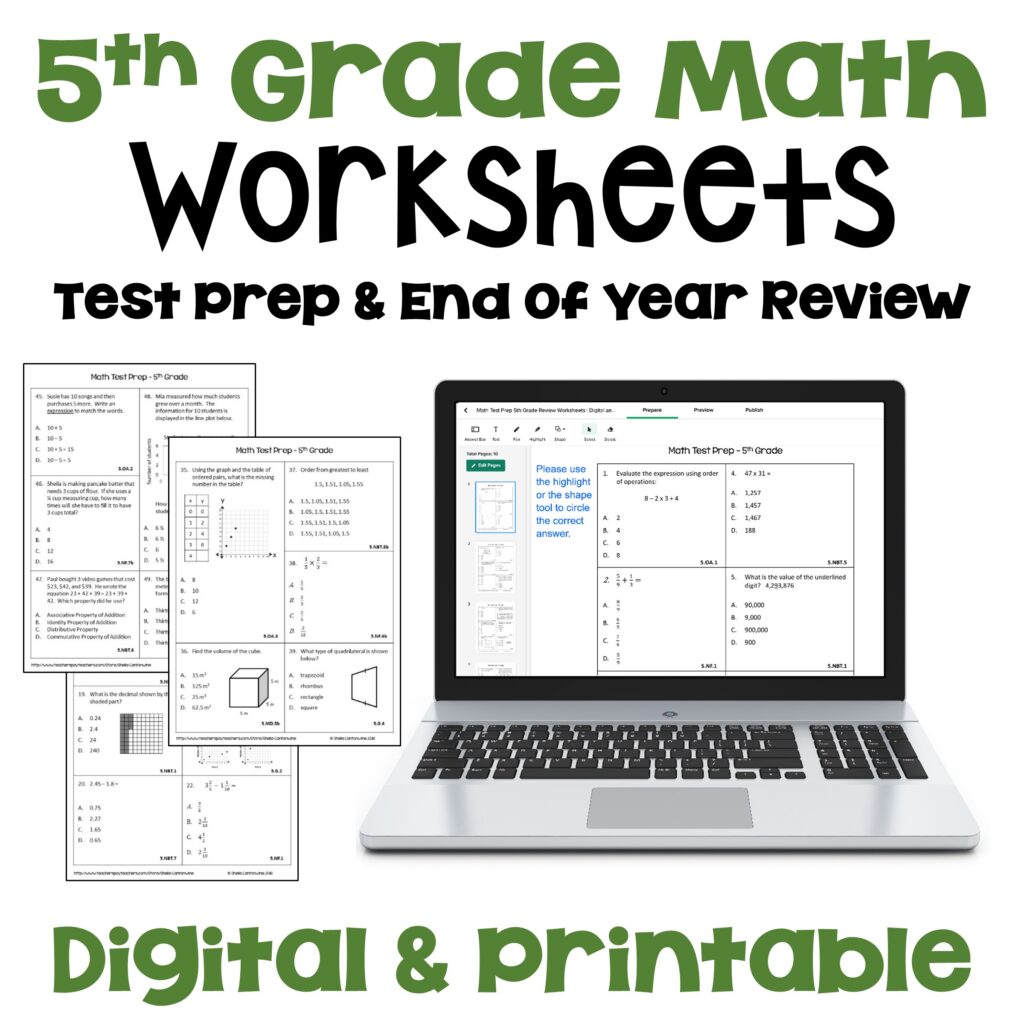
5th Grade math test prep and review worksheets
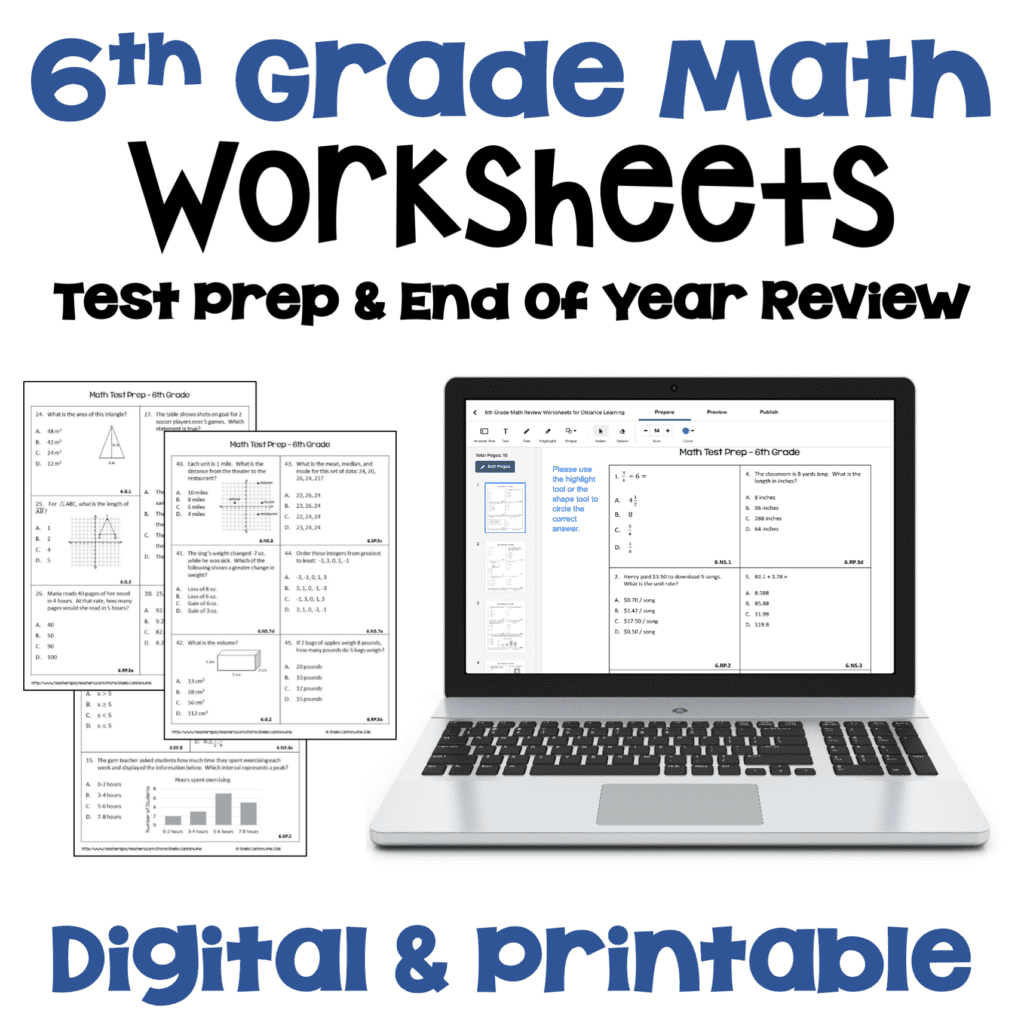
6th Grade Math Test Prep and Review Worksheets

Filed Under: 4th Grade Math, 5th Grade Math, 6th Grade Math, Test Prep and Review Tagged With: End of year exams, end of year math review, math practice tests, math review, math test prep, math worksheets, test prep

  • Page 1
  • Page 2
  • Go to Next Page »

Primary Sidebar

About Me Image

I love helping teachers everywhere by providing quality resources and practical tips for the classroom. I know how stressful teaching can be and I'd love to make your job just a little easier.

All the best, Sheila

  • Email
  • Facebook
  • Instagram
  • Pinterest

Search

Recent Blog Posts

Infuse Magic & Merriment in Your Classroom with Christmas Bingo

A Christmas Multi-Digit Multiplication Bundle They’ll Love!

Thanksgiving Dinner Math Project – Based Learning for Grades 5-7

Free fraction worksheets

Free Fraction Worksheets

Footer

  • Email
  • Facebook
  • Instagram
  • Pinterest

© Sheila Cantonwine 2024 | Privacy Policy & Affiliate Disclaimer

Copyright © 2026 · Foodie Pro Theme on Genesis Framework · WordPress · Log in